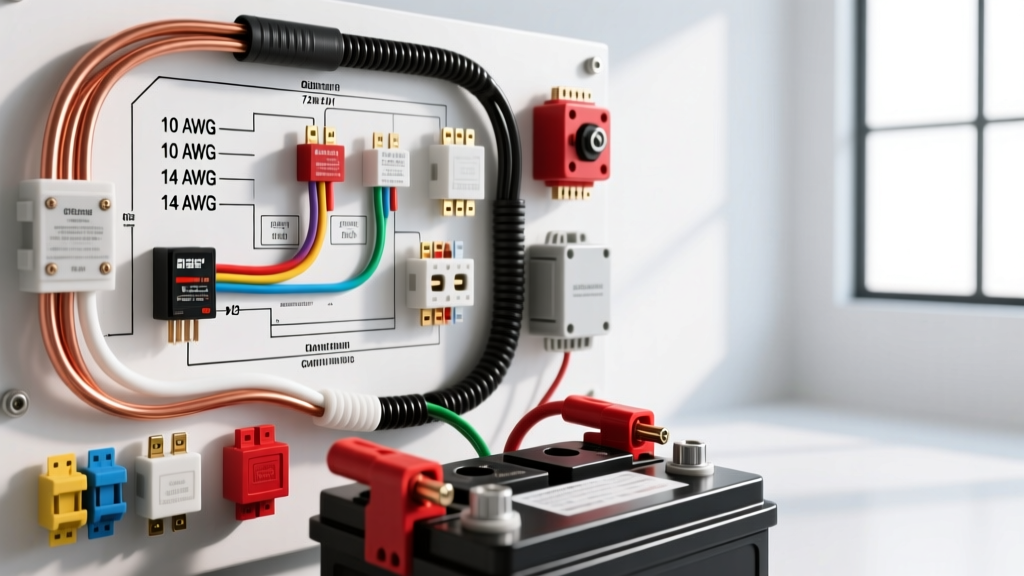
Understanding the 72V Architecture of the Electric GEM Car
The Neighborhood Electric Vehicle (NEV) market is dominated by the electric GEM car (Global Electric Motorcars, now manufactured by Polaris). Models like the e2, e4, e6, eS, and eL operate on a 72V DC nominal architecture, typically utilizing six 12V AGM batteries or modern LiFePO4 lithium upgrades. Unlike standard 36V or 48V golf carts, the 72V system demands rigorous attention to wire gauge, insulation ratings, and terminal torque specifications. When corrosion, chafing, or aftermarket lithium conversions necessitate a complete rewiring of the powertrain and control circuits, technicians and DIYers must carefully analyze the cost of materials versus the investment in specialized high-voltage DC tooling.
Mandatory Tooling for 72V EV Diagnostics and Assembly
Rewiring an electric GEM car is not a standard 12V automotive job. A 72V DC system can sustain severe electrical arcs if disconnected under load, and the amperage draw from the Sevcon or Curtis motor controllers can exceed 400A during peak acceleration. Therefore, standard automotive crimpers and basic multimeters are insufficient and potentially dangerous.
Diagnostic and Assembly Tool Cost Matrix
| Tool Category | Specific Requirement | Estimated Cost | Application in GEM Rewiring |
|---|---|---|---|
| Digital Multimeter | CAT III 1000V / CAT IV 600V Rated (e.g., Fluke 87V) | $400 - $450 | Testing 72V pack voltage, controller logic circuits, and isolation faults without risk of meter explosion. |
| Hydraulic Crimper | 6-Ton Hex Crimp for 2/0 to 4 AWG (e.g., Greenlee EK6PAT) | $550 - $700 | Crimping main battery cables and motor phase wires to ensure zero-resistance connections. |
| Torque Wrench | 1/4-inch drive, 20-200 in-lbs (e.g., CDI or Snap-on) | $150 - $220 | Applying exact torque to battery busbars and Anderson SB175 connectors to prevent thermal runaway. |
| Wire Stripper | Heavy-duty ratcheting stripper for 2/0 AWG welding wire | $80 - $120 | Removing thick EPDM insulation without nicking the tinned copper strands. |
| Deutsch Pin Tool | DT/DTM Contact Insertion & Extraction Tool | $45 - $65 | Servicing the throttle, F/R switch, and sensor pigtails on the Sevcon Gen4 controller. |
Total Tool Investment: For a professional or a dedicated fleet manager, the initial tooling cost ranges from $1,225 to $1,555. For a one-time DIY repair, renting a hydraulic crimper and borrowing a CAT-rated multimeter is the more cost-effective route.
Material Cost Analysis: OEM vs. Custom Wire Harnesses
When sourcing replacement wiring for an electric GEM car, you face a critical decision: purchase OEM replacement harnesses or fabricate a custom harness using marine-grade components. Because GEM vehicles are exposed to rain, humidity, and road salt, standard automotive primary wire (SAE J1128) will rapidly oxidize. According to SAE J1171 standards, marine-grade, tinned-copper wire with cross-linked polyethylene (XLPE) insulation is mandatory for NEVs to resist moisture and battery acid off-gassing.
72V Powertrain Wiring & Torque Specifications
| Circuit Path | Wire Gauge (AWG) | Insulation Color | Connector Type | Torque Spec |
|---|---|---|---|---|
| Battery Pack Series Links | 2/0 AWG (67.4 mm²) | Orange (Custom) / Red | 3/8" Ring Terminal | 9 - 11 Nm (80 - 97 in-lbs) |
| Pack Main + to Controller B+ | 2/0 AWG | Red | Anderson SB175 | 5.6 - 7.9 Nm (50 - 70 in-lbs) |
| Pack Main - to Controller B- | 2/0 AWG | Black | Anderson SB175 | 5.6 - 7.9 Nm (50 - 70 in-lbs) |
| Controller to Motor (U, V, W) | 2/0 AWG | Yellow, Black, Red | Ring Terminal / Molex | 12 - 15 Nm (Motor Lugs) |
| DC-DC Converter Input (72V to 12V) | 8 AWG | Red / Black | Anderson SB50 | 3 - 5 Nm |
| Throttle / F/R Switch Logic | 18 AWG Shielded | Multi-color | Deutsch DT 4-Pin | N/A (Crimp only) |
Cost Comparison:
An OEM main battery harness from a Polaris/GEM dealer typically costs between $850 and $1,200, and lead times can exceed three weeks for older e4 or e6 models. Conversely, fabricating a custom harness using 2/0 AWG SAE J1171 tinned wire (approx. $6.50/ft), genuine Anderson Power Products SB175 connectors ($18/pair), and heavy-duty adhesive-lined heat shrink costs roughly $250 to $325 in raw materials. The trade-off is the 6 to 8 hours of labor required to measure, cut, strip, and hex-crimp the cables.
Sevcon Gen4 Controller Pinout & Control Circuit Costs
Most modern electric GEM cars utilize the Sevcon Gen4 Size 4 or Size 6 motor controller. The control wiring harness is highly sensitive. Unlike the 2/0 AWG power cables, the logic harness uses 18 AWG shielded cables to prevent electromagnetic interference (EMI) from the high-amperage motor phase wires from corrupting the 0-5V throttle signal.
Sevcon Gen4 J2 Control Connector (Key Pins)
- Pin 1 (P1): +12V Switched (from ignition/key switch)
- Pin 2 (P2): Throttle High (5V Reference)
- Pin 3 (P3): Throttle Wiper (Signal Return, 0.8V - 3.6V)
- Pin 4 (P4): Throttle Low (0V Ground Reference)
- Pin 12: Forward Microswitch Input
- Pin 13: Reverse Microswitch Input
- Pin 18: Main Contactor Coil Driver (Low Side)
If the logic harness is damaged, replacing the OEM Sevcon pigtail costs upwards of $180. However, if you possess the proper Deutsch DT insertion tools, you can rebuild the pigtail using individual Deutsch sockets (approx. $0.45 each) and 18 AWG shielded multi-conductor cable for under $25.
Labor vs. DIY: The True Cost of Rewiring
Dealerships and specialized EV repair shops typically charge between $140 and $180 per hour for high-voltage NEV diagnostics and wiring labor. A complete teardown, harness removal, and custom rewiring of a 72V GEM e6 takes approximately 12 to 16 hours.
- Dealer Repair Cost: $1,680 - $2,880 (Labor) + $1,200 (OEM Parts) = $2,880 to $4,080+
- DIY Custom Rewire Cost: $250 - $325 (Materials) + Tool Rental/Purchase = $600 to $1,800 (depending on tool acquisition)
For fleet operators managing multiple GEM vehicles, investing in the hydraulic crimping tools and CAT-rated multimeters pays for itself after just one custom harness build.
Real-World Failure Modes & Diagnostic Insights
When diagnosing an electric GEM car before committing to a full rewire, isolate the specific failure mode. Full harness replacement is rarely necessary; localized repairs are usually sufficient.
- Throttle Faults (Sevcon Code 31/32): Often misdiagnosed as a bad controller or throttle pedal. In 80% of cases, water has breached the Deutsch DT connector at the pedal assembly, causing a short between the 5V reference (Pin 2) and the Wiper (Pin 3). Fix: Cut back 6 inches of wire, install new Deutsch pins, and seal the connector cavity with dielectric grease and heat shrink. Cost: $5.
- Forward/Reverse Switch Intermittency: The OEM F/R switch relies on internal microswitches that oxidize in humid climates. If the Sevcon LED flashes a sequence indicating a directional fault, test the continuity of the microswitches with your multimeter. Fix: Bypass the OEM switch housing and wire heavy-duty industrial microswitches directly into the logic harness. Cost: $15.
- Anderson SB175 Thermal Melting: If the main battery disconnect plug shows melted polycarbonate housing, the terminal retention spring has failed, or the 2/0 AWG wire was crimped with a cheap hammer crimper, introducing micro-voids and high resistance. Fix: Cut out the damaged terminal, strip the 2/0 AWG wire, and apply a proper hex-crimp using a 6-ton hydraulic tool. Cost: $18 for the connector, plus tool access.
Authoritative References
For technicians and DIYers undertaking an electric GEM car rewiring project, always consult the following engineering standards and hardware manuals to ensure safety and compliance:
- SAE J1171: External Ignition Protection of Marine Electrical Devices - Essential for selecting the correct wire insulation and terminal sealing methods for NEVs exposed to outdoor elements.
- Anderson Power Products SB175 Datasheet - Provides exact torque specifications, crimp depth requirements, and insertion force data for the 72V main battery connectors.
- Sevcon Gen4 Hardware & Software Manual - The definitive guide for J1/J2 pinouts, LED fault code translation, and logic circuit voltage tolerances.
By understanding the specific 72V architecture, investing in the correct hydraulic and diagnostic tooling, and utilizing marine-grade materials, you can safely and cost-effectively restore or upgrade the electrical system of any electric GEM car.