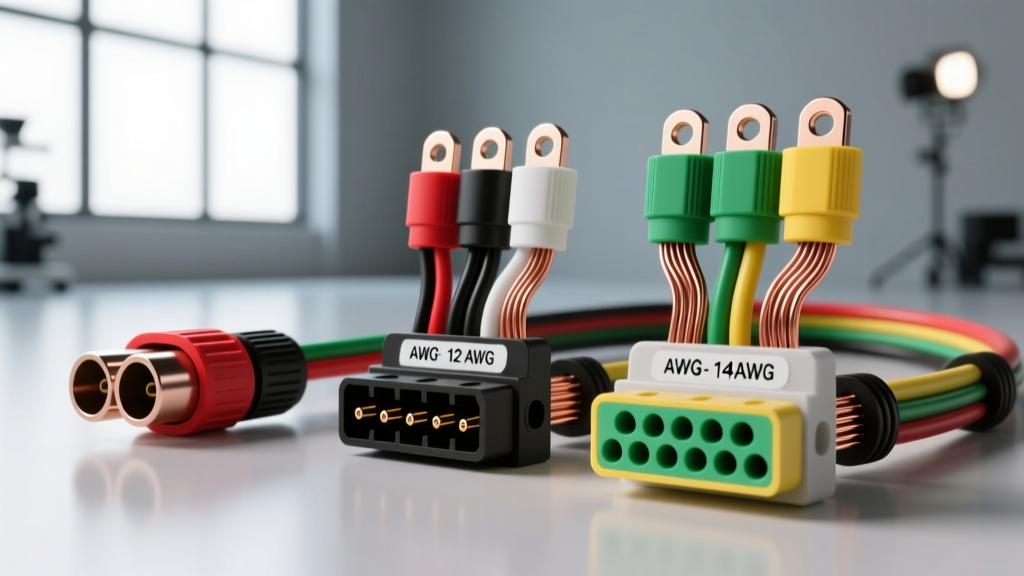
Introduction to Trailer Wiring Gauges and Standards
When fabricating a custom harness, repairing a damaged pigtail, or upgrading a tow vehicle's electrical system, determining the correct wire size is critical for safety and functionality. A frequent question among automotive technicians and DIYers is: what gauge is trailer wire? The answer is not a single number; it depends entirely on the connector type, the specific circuit's amperage draw, and the total length of the harness. Automotive trailer wiring is governed by SAE J1128 standards, which dictate not only the color codes but also the stranding and insulation requirements for low-tension, high-flexibility environments.
Using undersized wire on a trailer harness leads to severe voltage drop, dim lighting, and potentially melted connectors or electrical fires. Conversely, using massively oversized wire makes the harness stiff, prone to breaking from vibration, and difficult to route through tight chassis channels. This technical reference breaks down the exact American Wire Gauge (AWG) specifications for standard trailer connectors, brake controller circuits, and voltage drop calculations.
The Quick Answer: Standard Trailer Wire Gauges
For the vast majority of light-duty and recreational towing applications, trailer wiring harnesses utilize a mix of 18, 16, 14, and 12 AWG stranded copper wire. The ground and high-draw auxiliary circuits always require a thicker gauge than the standard lighting circuits.
- 4-Way Flat Connectors: Typically 18 AWG for lighting circuits (tail, turn, stop) and 16 AWG for the ground circuit.
- 5-Way Flat Connectors: Follows the 4-way standard (18 AWG lighting, 16 AWG ground) with an additional 18 AWG or 16 AWG wire for the reverse lockout solenoid.
- 7-Way RV Blade Connectors: Uses a heavy-duty mix. 12 AWG for Ground and 12V Auxiliary, 14 AWG for Electric Brakes and Turn Signals, and 16 AWG for Tail/Marker lights.
4-Way and 5-Way Flat Connector Specifications
The 4-way flat connector is the most common interface for light-duty utility trailers, small boat trailers, and motorcycle trailers. Because these trailers lack electric brakes and 12V auxiliary power requirements, the amperage draw is limited to standard incandescent or LED lighting. According to etrailer's wiring guidelines and SAE color codes, the pinout and gauge requirements are as follows:
| Pin Position | Function | SAE Color Code | Recommended AWG | Max Ampacity (Short Run) |
|---|---|---|---|---|
| Pin 1 (Exposed Ground) | Chassis Ground | White | 16 AWG | 10A - 15A |
| Pin 2 | Tail / Running Lights | Brown | 18 AWG | 5A - 7A |
| Pin 3 | Left Turn / Stop | Yellow | 18 AWG | 5A - 7A |
| Pin 4 | Right Turn / Stop | Green | 18 AWG | 5A - 7A |
Note on 5-Way Flat: A 5-way flat connector adds a center pin (usually Blue wire, 16 AWG) dedicated to energizing a reverse lockout solenoid on hydraulic surge brake couplers. This prevents the trailer brakes from engaging when the tow vehicle is in reverse.
7-Way RV Blade Connector Specifications
Heavy-duty utility trailers, travel trailers, and fifth-wheels require the 7-way RV blade connector (often manufactured by companies like Bargman or Pollak). This connector handles electric trailer brakes, 12V auxiliary power for interior lighting or charging breakaway batteries, and reverse lights. Because of the higher current demands, the wire gauges are significantly thicker.
| Pin Clock Position | Function | SAE Color Code | Required AWG | Technical Notes |
|---|---|---|---|---|
| 7:00 (Bottom Center) | Ground Return | White | 12 AWG (or 10 AWG) | Must handle combined return current of all lighting circuits. |
| 5:00 | Electric Brakes | Blue | 12 AWG | Carries up to 12-15A per axle from the brake controller. |
| 1:00 | Tail / Marker Lights | Brown | 16 AWG | Lower draw, especially if converted to LED markers. |
| 11:00 | 12V Auxiliary Power | Black or Red | 12 AWG (or 10 AWG) | Used for charging trailer battery or running 12V fridge. |
| 9:00 | Left Turn / Stop | Yellow | 14 AWG | Handles combined stop/turn bulb amperage. |
| 3:00 | Right Turn / Stop | Green | 14 AWG | Handles combined stop/turn bulb amperage. |
| Center Pin | Reverse Lights / Aux | Purple | 16 AWG | Typically only powers reverse lamps or utility bed lights. |
Brake Controller Internal Wiring: A Critical Distinction
When asking what gauge trailer wire is required, many installers confuse the trailer harness with the tow vehicle internal wiring. The wire running from the tow vehicle's battery to the aftermarket brake controller, and from the controller to the 7-way receptacle, must be sized for continuous high-amperage loads.
- Battery to Brake Controller: 10 AWG wire, protected by a 30A or 40A circuit breaker mounted within 18 inches of the battery positive terminal.
- Brake Controller to 7-Way Receptacle (Blue Wire): 12 AWG minimum. If the tow vehicle is exceptionally long (e.g., a dually crew cab with an 8-foot bed), upgrade to 10 AWG to prevent voltage drop before the signal even reaches the trailer.
SAE Stranding vs. NEC Building Wire
It is vital to purchase wire specifically rated for automotive and trailer use (SAE J1128), rather than standard THHN building wire found at hardware stores. SAE trailer wire features a much higher strand count per AWG size. For example, a 12 AWG SAE wire might contain 19 strands of 0.0179-inch copper, whereas a standard solid-core or low-strand building wire is rigid. Trailers endure constant high-frequency vibration, torsion, and extreme temperature cycling. Solid or low-strand wire will work-harden, crack, and eventually snap inside the insulation, leading to intermittent electrical faults that are notoriously difficult to diagnose.
Calculating Voltage Drop for Long Trailers
Voltage drop is the silent killer of trailer electrical systems. If you are wiring a 30-foot gooseneck trailer with a 12V auxiliary circuit drawing 15A (perhaps for a winch or interior lighting), using standard 12 AWG wire will result in unacceptable voltage loss at the trailer's distribution block.
Voltage Drop Formula:
VD = (2 x L x I x R) / 1000
- L = Length of the wire in feet (one way)
- I = Current in Amps
- R = Resistance per 1000 feet of the specific AWG wire (12 AWG copper is approx 1.588 ohms/kft)
Example: A 30-foot run of 12 AWG wire carrying 15A.
VD = (2 x 30 x 15 x 1.588) / 1000 = 1.42 Volts.
While 1.42V drop on a 12V system leaves 10.58V (which is generally acceptable for lighting), if the run extends to 50 feet on a large RV, the drop exceeds 2.3V, which can cause electric brake controllers to underperform or 12V fridges to fail to start. For runs exceeding 35 feet carrying over 10A, always upgrade the 12V Aux and Ground circuits to 10 AWG.
Common Failure Modes and Troubleshooting
1. Ground Backfeed Through the Hitch
Symptom: Trailer running lights flicker when the turn signal is applied, or the trailer brakes engage slightly when the headlights are turned on.
Cause: The 16 AWG or 18 AWG white ground wire in the trailer harness is overloaded, corroded, or broken. The electrical current seeks the path of least resistance, backfeeding through the trailer's lighting circuits and grounding out through the steel hitch ball and coupler.
Fix: Never rely on the hitch ball for a ground. Run a dedicated 12 AWG white ground wire from the trailer's main junction box directly to a clean, bare-metal point on the trailer chassis, bypassing the factory pigtail ground if necessary.
2. Melted 7-Way Auxiliary Pins
Symptom: The plastic housing around Pin 4 (12V Aux) on the 7-way plug is melted or discolored.
Cause: The trailer is equipped with a high-draw device (like a 12V compressor or a large inverter) pulling 20A+ through a standard 14 AWG or 16 AWG auxiliary wire, or the tow vehicle's alternator output is pushing max amperage to a deeply depleted trailer battery.
Fix: Ensure the 12V Aux pin on both the vehicle and trailer sides is wired with 12 AWG or 10 AWG wire. Install a DC-DC charger on the trailer side to regulate the current draw from the tow vehicle's alternator.
Summary Reference
Knowing what gauge is trailer wire ensures your harness can handle the physical and electrical demands of the road. Always default to SAE J1128 stranded copper, respect the color codes to maintain serviceability, and oversize the ground and 12V auxiliary circuits whenever the total harness length approaches or exceeds 30 feet.