Integrating Commercial Ventilation into Mobile Chassis
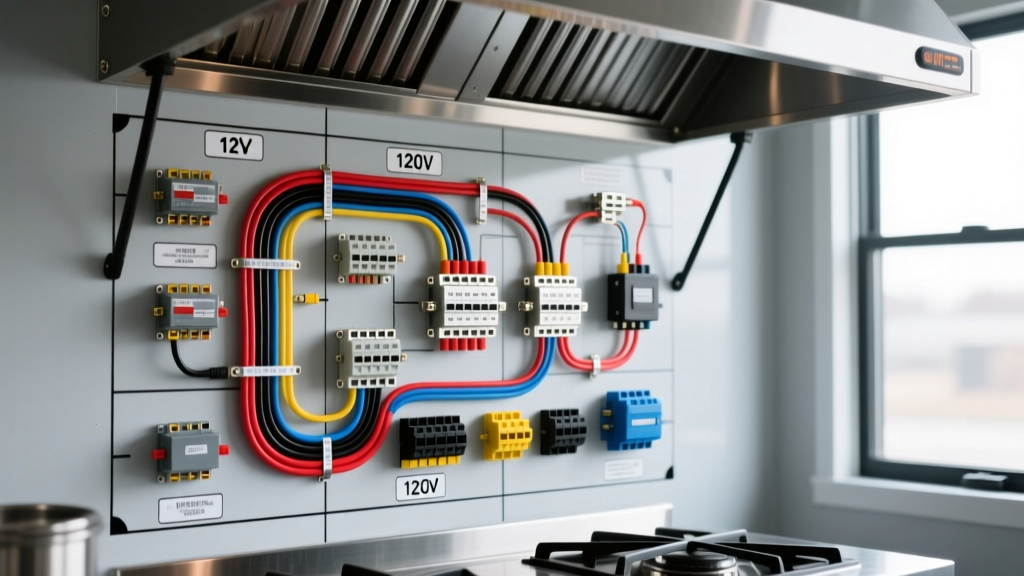
When converting a commercial step van—such as a Freightliner MT45, Ford E-450 cutaway, or Chevrolet Express 4500—into a mobile catering unit, installing a Type 1 commercial kitchen hood is a critical safety and operational requirement. Unlike stationary restaurants, mobile food units face unique electrical challenges. You are bridging the gap between heavy-duty 120V/240V AC commercial cooking equipment and a 12V/24V DC automotive chassis. This comprehensive wiring diagram for commercial kitchen hood systems details the exact integration points, wire gauges, relay pinouts, and fire suppression interlocks required to keep your mobile kitchen safe, legal, and fully operational on the road.
System Architecture: AC Load and DC Interlocks
A standard commercial hood (such as those manufactured by CaptiveAire or Gaylord) installed in a food truck consists of three primary electrical subsystems: the exhaust blower motor (120V AC), the hood lighting circuit (120V AC), and the fire suppression interlock (12V DC or 24V DC depending on the setup). Because a food truck relies on an onboard generator (e.g., Cummins Onan Quiet Series) or an inverter bank for AC power, the wiring diagram must account for voltage drop, vibration resistance, and strict NFPA fire codes.
The 120V AC Exhaust and Makeup Air Circuit
The exhaust blower motor typically draws between 6 and 14 amps under load, requiring a dedicated 20-amp circuit. In a mobile environment, standard solid-core THHN wire is strictly prohibited due to chassis vibration, which can cause metal fatigue and wire breakage. Instead, the wiring diagram for commercial kitchen hood AC feeds mandates the use of stranded MTW (Machine Tool Wire) or stranded THHN routed through flexible liquid-tight metallic conduit. The power originates from the generator's Automatic Transfer Switch (ATS), feeds into a Square D QO marine-grade or RV-rated subpanel, and terminates at a NEMA 5-20R twist-lock receptacle mounted directly to the hood's junction box.
Fire Suppression Interlock & Automotive Relay Integration
This is where automotive electrical expertise becomes mandatory. NFPA 96 requires that when a hood's fire suppression system (like an Ansul or Pyro-Chem unit) deploys, it must automatically shut off all fuel and electrical power to the cooking equipment beneath it. In a food truck, the Ansul microswitch must interface with the vehicle's 12V DC system to close gas solenoid valves and trigger a chassis-mounted alarm. We achieve this using a heavy-duty Bosch-style 5-pin automotive relay, integrating the commercial hood directly into the vehicle's low-voltage harness.
Step-by-Step Wiring Diagram Walkthrough
Step 1: Sizing the Generator and ATS Feed
Before wiring the hood, ensure your AC source can handle the inductive startup surge of the blower motor. A 1/2 HP exhaust fan can draw up to 35 amps momentarily upon startup. Your generator must be rated for at least 8kW if running the hood, fridge compressors, and HVAC simultaneously. The feed from the generator to the subpanel should be 6 AWG stranded copper for runs up to 25 feet to minimize voltage drop.
Step 2: Routing the 12V DC Interlock Harness
The fire suppression microswitch is located inside the hood's mechanical housing. Run a 14 AWG SAE J1128 GXL (cross-linked polyethylene) 2-conductor cable from the hood down through the chassis grommet to a centralized 12V DC relay block. GXL wire is essential here as it withstands high under-hood temperatures and resists grease and chemical degradation common in mobile kitchens.
Step 3: Wiring the Bosch-Style Shutoff Relay
To shut off the 12V DC gas solenoids when the hood system trips, wire a standard 12V 40A automotive relay as follows:
- Pin 86 (Coil +): Connect to a switched 12V ignition source or a dedicated 12V dashboard toggle switch.
- Pin 85 (Coil -): Connect to the Ansul microswitch (Normally Closed). The other side of the microswitch grounds to the chassis.
- Pin 30 (Common): Connect to 12V B+ (Battery Positive via a 15A inline fuse).
- Pin 87 (Normally Open): Not used in this specific fail-safe configuration.
- Pin 87A (Normally Closed): Connect to the positive trigger wire of your cooking equipment's 12V gas solenoid valves.
How it works: Under normal conditions, the relay is de-energized, allowing 12V power to flow from Pin 30 to Pin 87A, keeping the gas valves open. If a fire occurs, the Ansul system trips, breaking the ground path on Pin 85. The relay energizes, shifting the internal contact to Pin 87, instantly cutting 12V power to the gas solenoids and shutting off the fuel supply.
Wire Gauge, Pinout, and Connector Specifications
Adhering to exact specifications prevents catastrophic failures in mobile environments. Use the following reference chart for your commercial kitchen hood integration:
| Circuit Function | AWG Size | Wire Color Code | Insulation Type | Termination / Connector |
|---|---|---|---|---|
| 120V AC Exhaust Blower | 12 AWG | Black (Hot), White (Neutral), Green (Ground) | Stranded MTW / THHN | NEMA 5-20P Twist-Lock |
| 12V DC Fire Interlock Trigger | 14 AWG | Yellow w/ Red Stripe | SAE J1128 GXL | Deutsch DT 2-Pin Sealed |
| 12V DC Solenoid Shutoff Feed | 12 AWG | Red (B+), Black (Ground) | SAE J1128 TXL | 1/4" Spade, Adhesive Heat Shrink |
| Hood Lighting Circuit | 14 AWG | Blue (Hot), White (Neutral) | Stranded MTW | WAGO 221 Lever Nuts |
| Generator to Subpanel Feed | 6 AWG | Black, White, Green | Stranded THHW | Compression Lugs, 25 in-lbs torque |
Real-World Troubleshooting & Failure Modes
Symptom: Hood Blower Motor Overheats and Trips Thermal Overload
Cause: Voltage drop on the generator-to-subpanel feed or a loose ATS connection. Inductive AC motors draw inversely proportional amperage when voltage drops. If your 120V circuit sags to 105V under load due to undersized wiring, the motor will pull excessive amperage, overheat, and trip its internal thermal reset switch.
Fix: Measure the voltage at the NEMA 5-20R receptacle while the hood is running. It must remain above 114V. If it drops lower, upgrade the feed wiring, check all ATS terminal torque specs (typically 25-30 in-lbs for 6 AWG), and apply dielectric grease to generator output contacts to prevent corrosion-induced resistance.
Symptom: Ansul Microswitch Burns Out After a Single Deployment Test
Cause: Inductive voltage spike (flyback). When the 12V DC relay coil de-energizes, it sends a massive reverse voltage spike back through the circuit. The low-amperage microswitch inside the commercial hood cannot handle this spike, resulting in arced and welded contacts.
Fix: Install a 1N4007 flyback diode across the relay coil (Pins 85 and 86). The cathode (silver stripe) must face Pin 86 (12V+). This safely dissipates the inductive kickback and protects the expensive commercial hood microswitch.
Symptom: GFCI Breaker Trips Randomly When Driving Over Bumps
Cause: Moisture or grease ingress in the hood's junction box, combined with chassis vibration causing a momentary ground fault or neutral-to-ground short.
Fix: Ensure all 120V AC connections inside the hood canopy are made using IP68-rated waterproof wire nuts or sealed WAGO connectors. Verify that the neutral and ground are strictly isolated in the subpanel; a bonded neutral-ground in a subpanel will cause nuisance GFCI trips in mobile applications.
Authoritative References & Standards
When designing and executing the wiring diagram for commercial kitchen hood setups in mobile vehicles, always consult the following codes and standards to ensure compliance with local Authority Having Jurisdiction (AHJ) inspectors:
- NFPA 96: Standard for Ventilation Control and Fire Protection of Commercial Cooking Operations - Dictates the mandatory electrical and fuel shutoff interlocks for hood fire suppression systems.
- SAE J1128: Low Tension Primary Cable - The automotive standard for 12V DC wire insulation (GXL/TXL) required for chassis routing in high-heat, high-vibration environments.
- NFPA 1192: Standard on Recreational Vehicles - Frequently adopted by local fire marshals as the baseline electrical code for mobile food units, covering ATS requirements, panel bonding, and stranded wire mandates.