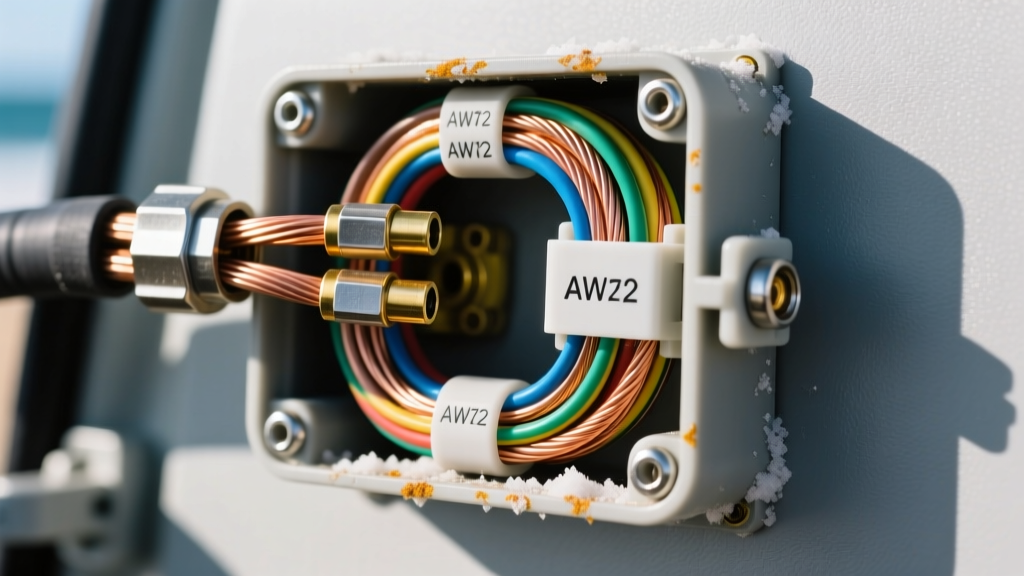
The 'Island Auto Electrical' Standard: Bridging Automotive and Marine Architectures
Vehicles operated in island, coastal, and high-salinity environments face extreme electrical degradation. The term island auto electrical refers to a specialized hybrid discipline that applies rigorous marine-grade electrical standards (such as those from the ABYC) to terrestrial automotive platforms. Standard automotive wiring harnesses, designed for the relatively benign under-hood environments of inland climates, fail rapidly when exposed to salt mist, high humidity, and galvanic corrosion prevalent in coastal zones.
This technical reference outlines the exact specifications, material requirements, and architectural topologies required to build or retrofit an automotive electrical system for island and coastal survival. We will cover conductor metallurgy, sealed connector pinouts, ignition-protected component selection, and advanced grounding strategies.
Conductor Specifications: Tinned Copper and Insulation Types
Standard automotive primary wire (SAE J1128) utilizes bare copper stranding. In a salt-air environment, bare copper oxidizes rapidly, forming copper oxide—a semiconductor that increases resistance, generates heat, and ultimately causes voltage drop and harness fires. Island auto electrical builds mandate the use of tinned copper marine-grade wire, specifically meeting UL 1426 (Boat Cable) or SAE J1128 Type 3 with tinned strands.
The tin plating acts as a sacrificial anode and a physical barrier against chloride intrusion. Furthermore, the insulation must resist UV degradation and hydrocarbon exposure.
Wire Specification Comparison Chart
| Specification Standard | Conductor Material | Stranding (10 AWG Example) | Insulation Type | Max Operating Temp | Coastal Suitability |
|---|---|---|---|---|---|
| SAE J1128 (Standard Auto) | Bare Copper | 73/30 | PVC / Cross-linked PE | 105°C - 125°C | Poor (Rapid Oxidation) |
| UL 1426 (Marine Boat Cable) | Tinned Copper | 37/24 (Ultra-Flexible) | PVC (Salt/UV Resistant) | 105°C | Excellent (Mandatory) |
| SAE J1128 Type 3 (Marine Auto) | Tinned Copper | 19/23 | XLPE (Cross-Linked) | 150°C | Superior (High Temp/Salt) |
Voltage Drop Calculations for Coastal 12V Systems
Because tinned marine wire often features finer stranding for flexibility, its DC resistance is marginally different from solid-core or coarse-strand auto wire. When sizing circuits for high-draw island vehicle accessories (e.g., electric winches, marine air conditioning compressors, or heavy-duty lighting arrays), voltage drop must be calculated using the specific resistance of tinned UL 1426 wire.
The formula for a 12V DC circuit voltage drop is: VD = (2 x L x I x R) / 1000, where L is one-way length in feet, I is current in amps, and R is resistance per 1000 feet.
12V System Voltage Drop Reference (20 ft One-Way Run @ 40A Load)
| AWG Size | Resistance (Ω/1000ft) | Calculated Voltage Drop | % Drop (12V System) | Island Spec Recommendation |
|---|---|---|---|---|
| 10 AWG | 1.10 | 1.76V | 14.6% | REJECT (Exceeds 3% critical limit) |
| 8 AWG | 0.69 | 1.10V | 9.1% | REJECT (Acceptable only for non-critical loads) |
| 6 AWG | 0.43 | 0.68V | 5.6% | MARGINAL (Use for short-run lighting) |
| 4 AWG | 0.27 | 0.43V | 3.5% | ACCEPTABLE (Minimum for 40A continuous) |
| 2 AWG | 0.17 | 0.27V | 2.2% | OPTIMAL (Required for winches/starters) |
Sealed Connector Architectures and Pin Configurations
Standard open-barrel spade connectors and unsealed push-tabs are strictly prohibited in island auto electrical builds. Moisture ingress via capillary action will wick salt water deep into the harness. All connections must utilize environmentally sealed connector systems with integral silicone mat seals and secondary locking mechanisms.
Deutsch DT Series & AMP Superseal 1.5 Specifications
For sensor networks, ECU inputs, and low-to-medium current actuator circuits, two connector families dominate the coastal specification:
- AMP Superseal 1.5 Series: Ideal for 14 to 20 AWG wire. Features a silicone ribbed seal that compresses around the wire insulation. Crimp Specification: Use a 1.5mm² die for 16 AWG (approx. 1.1mm crimp height). Must utilize the specific AMP extraction tool (Part #91936-1) to avoid damaging the silicone seal during pin removal.
- Deutsch DT Series: Rated for 13A continuous per contact. Accepts 14-20 AWG. Utilizes a hard dielectric rear insert and a wedgelock (secondary lock). Assembly Protocol: Pins must be crimped prior to insertion into the housing. The wedgelock must be fully seated until it clicks, ensuring the pin retention fingers engage. A silicone plug must be inserted into any unused cavity to maintain the IP68 waterproof rating.
Dielectric Grease Application: Apply a silicone-based, non-conductive dielectric grease (e.g., Dow Corning Molykote 111) to the exterior mating face of the connector housing, never inside the pin cavity where it can interfere with electrical contact pressure.
Component Upgrades: Ignition-Protected Alternators and Starters
In island environments, vehicles are frequently exposed to not just salt, but potentially explosive bilge gases if the vehicle is utilized as a tender for marine vessels or operates on ferry decks. Standard automotive alternators and starters are not ignition-protected and can ignite volatile fumes.
According to SAE J1171 and ISO 8846 standards, marine and coastal-specific electrical components must be ignition-protected. Furthermore, standard automotive alternators utilize exposed slip rings and carbon brushes. In a salt-air environment, carbon dust mixes with salt moisture to form a highly conductive sludge, leading to internal short circuits and stator burnout.
Island Auto Electrical Alternator Selection Criteria
- Brushless Design: Eliminates carbon dust and slip rings entirely, utilizing a stationary field coil and rotating magnetic pole piece. Ideal for high-salinity zones.
- Potted Diode Bridges: The rectifier assembly must be encapsulated in marine-grade epoxy to prevent chloride attack on the diode junctions.
- External Regulation with Temperature Sensing: Coastal heat and high humidity alter battery chemistry acceptance rates. An external regulator with a battery temperature sensor will adjust the charging voltage curve (typically 14.4V to 14.7V for AGM) to prevent thermal runaway and outgassing.
Advanced Grounding Topologies for Corrosion Mitigation
The most common failure point in any coastal vehicle electrical system is the ground return path. Daisy-chained grounds are unacceptable; if one node corrodes, the entire downstream circuit loses its reference, leading to back-feeding and ECU damage.
Island auto electrical architecture requires a Star Grounding Topology utilizing tinned copper bus bars.
Grounding Execution Protocol
- Central Ground Bus: Mount a tinned copper, stud-type bus bar in a protected, dry cabin location. This serves as the primary star point for all ECU, sensor, and accessory grounds.
- Chassis Penetrations: When grounding to the chassis, remove all paint, powder coat, and undercoating down to bare metal using a brass wire brush (brass prevents sparking and is softer than steel, preserving the zinc coating on galvanized frames).
- Anti-Corrosion Compound: Immediately after torquing the ground ring terminal to the chassis (typically 15-20 Nm depending on stud size), encapsulate the entire joint in a conductive anti-oxidant paste such as No-Ox-Id 'A-Special'. This grease displaces moisture and prevents galvanic corrosion between the copper terminal and steel chassis.
- Hardware: Use 316-grade stainless steel bolts, flat washers, and nyloc nuts. Never use zinc-plated hardware for primary high-amperage ground returns, as the zinc coating introduces a dissimilar metal junction that will corrode preferentially in a salt environment.
Summary and Maintenance Intervals
Building an electrical system to island auto electrical specifications requires an upfront investment in UL 1426 tinned wire, sealed Deutsch/AMP connectors, and SAE J1171 certified components. However, this architecture eliminates the chronic voltage drops, parasitic draws, and harness failures that plague standard vehicles in coastal regions. For ongoing maintenance, all sealed connectors should be uncoupled, inspected for pin fretting, and re-greased annually, and all chassis ground points should be checked for torque retention and re-encapsulated with anti-oxidant paste every 12 months. For further reading on marine-grade wiring adaptations, consult the ABYC Electrical Standards and the comprehensive guides available at MarineHowTo.