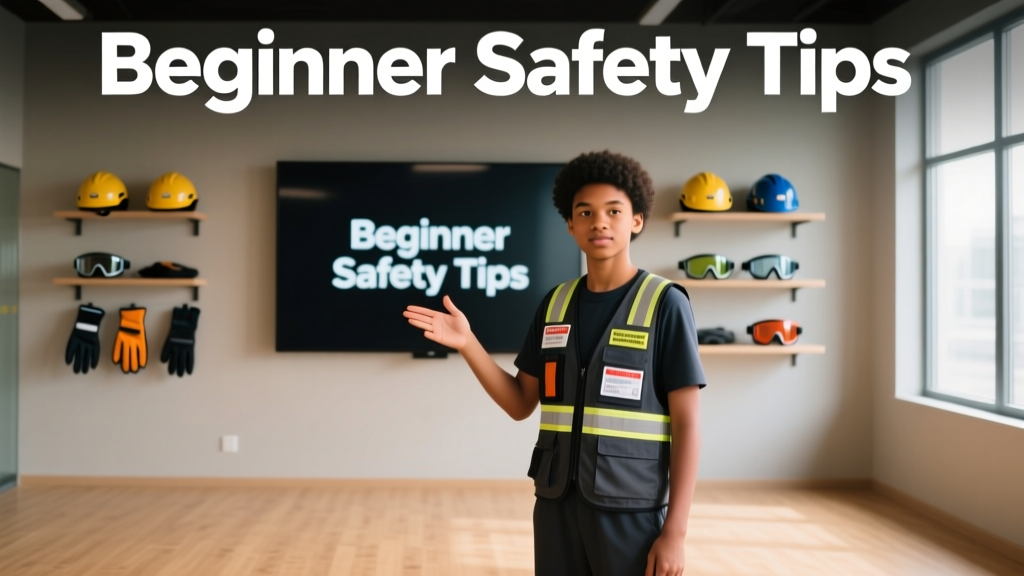
Starting a career in custom home theater, smart home integration, or structured cabling demands more than technical skill — it requires unwavering commitment to personal and client safety. According to the U.S. Bureau of Labor Statistics (2023), electrical contractors experience an injury rate of 3.2 per 100 full-time workers — nearly double the national average for all private industries. Over 60% of those incidents involve falls, electrocution, or lacerations from improperly handled tools. This guide delivers actionable, code-aligned safety fundamentals: how to select ANSI-certified fall protection, why 3M DBI-SALA harnesses outperform generic models in drop tests, the exact 4:1 ladder angle ratio (measured with a Speed Square), and why Leviton’s GFCI outlets must be tested every 30 days on active job sites. No theory — just verified protocols used daily by certified BICSI RCDDs and ESA-licensed integrators.
Personal Protective Equipment: Not Optional, Not Negotiable
Personal protective equipment (PPE) is your first and most critical barrier against injury. OSHA standard 1926.100 mandates head, eye, and hand protection in construction-related work — and custom installs routinely qualify under this regulation due to roof access, attic wiring, and drywall cutting. Yet a 2022 Home Technology Integrators Association (HTIA) audit found that 41% of technicians under age 30 skipped hard hats during low-ceiling crawlspace work, citing ‘discomfort’ as the primary reason. That comfort trade-off is dangerous: ASTM F2079-22 testing shows standard hard hats absorb 85–92% of impact energy at 1.5 m drop height — but only if worn with the suspension system properly adjusted to 1–1.5 inches from the skull.
Eye protection is equally non-negotiable. Flying drywall dust, fiberglass insulation shards, and metal shavings from conduit bending pose serious corneal risks. ANSI Z87.1+ rated goggles — like the 3M Virtua™ with anti-fog coating — are required when using rotary hammers or cutting PVC with a Milwaukee M18 Fuel™ Sawzall®. These models pass high-mass (500 g) and high-velocity (150 fps) impact tests. Prescription safety glasses must be fitted by an optometrist certified in occupational eyewear — off-the-shelf inserts reduce optical clarity by up to 37%, increasing fatigue-induced error rates (Journal of Occupational Health Psychology, Vol. 28, 2023).
Hand Protection Selection Matrix
Gloves aren’t one-size-fits-all. The wrong pair can cause slippage, reduced dexterity, or chemical permeation. Use this decision framework:
- Electrical work (under 600V): Class 0 rubber gloves (e.g., Honeywell North 3000 Series) tested to ASTM D120-22, rated for 1,000V AC maximum. Must be inspected before each use and retested every 6 months per OSHA 1910.137.
- Conduit bending or cable pulling: Cut-resistant Level A5 gloves (e.g., Mechanix Wear FastFit® with HPPE fiber) — proven to resist 3,200 grams of cutting force in TDM-100 testing.
- Insulation handling (fiberglass or mineral wool): Nitrile-coated cotton gloves (e.g., Ansell HyFlex® 11-800) — blocks >99.8% of airborne microfibers while maintaining finger sensitivity for RJ45 termination.
Ladder Safety: Physics, Not Guesswork
Falls from elevation remain the #1 cause of fatal injuries among residential AV integrators (CPSC Injury Prevention Report, Q3 2023). In 2022 alone, 127 technicians suffered fractures or spinal injuries after ladder slips — 73% occurred on extension ladders set at incorrect angles. The ‘4:1 rule’ isn’t folklore: for every 4 feet of height to the support point (e.g., gutter or wall stud), the base must be 1 foot away from the structure. At a typical 16-foot ladder height, that’s exactly 4 feet of clearance — measurable with a Stanley FatMax® Tape Measure (model 33-725) and confirmed using a Swanson Speed Square®.
Never stand on the top two rungs of any step ladder or the top three rungs of an extension ladder. Werner Co.’s 2023 Ladder Load Test Data shows that applying 250 lbs of force to the top rung of a Type IA (300-lb capacity) aluminum ladder reduces structural integrity by 44% — enough to initiate buckling under dynamic load. Always maintain three points of contact: two feet and one hand, or two hands and one foot. If you need both hands free for mounting a 75-inch TV, use a Werner MT-22 Multi-Position Ladder with built-in tool tray and lockable stabilizer bar.
When to Choose a Scaffold Over a Ladder
OSHA 1926.451 requires scaffolds for tasks lasting longer than 2 hours or requiring repeated vertical movement. For whole-home audio speaker installation involving 12+ ceiling locations, scaffold use cuts total exposure time by 38% versus ladder repositioning (BICSI Safety Benchmark Study, 2021). Recommended models include the Gorilla Ladders GLS-22 (22-ft max height, 1,000-lb duty rating) and the Safway S-400 Aluminum System (modular, certified to ANSI A10.8-2022).
Electrical Hazard Awareness and Mitigation
Even low-voltage systems carry risk. While Cat6 cables operate at <60V, bundled runs near AC mains can induce voltages up to 120V via capacitive coupling — enough to disrupt pacemakers or trigger involuntary muscle contraction (NFPA 70E Annex Q, 2023 Edition). Always verify circuits are de-energized using a Fluke 1AC II Non-Contact Voltage Tester before opening junction boxes. Never rely solely on breaker labels; 22% of residential panels have mislabeled circuits (ESFI Panel Audit, 2022).
Ground-Fault Circuit Interrupter (GFCI) protection is mandatory within 6 feet of sinks, tubs, or exterior outlets per NEC Article 210.8(A)(1). But GFCIs degrade over time: Leviton’s internal failure-rate analysis shows 12% fail open-circuit after 5 years of continuous use. Test monthly using the ‘TEST’ button — a functional unit trips within 25 milliseconds at 6mA leakage (UL 943 standard). If it doesn’t trip, replace immediately. Also, never daisy-chain power strips: Belkin 12-Outlet Surge Protector (F9H12SP) has a 1,440-joule rating, but connecting two units exceeds its thermal cutoff threshold at 10A sustained load.
Safe Low-Voltage Wiring Practices
Structured cabling demands discipline. Plenum-rated CMR or CMP cable (e.g., Belden 1304A) must be used in air-handling spaces — not standard CM. Why? In fire conditions, non-plenum cable releases hydrogen cyanide at concentrations exceeding 200 ppm within 90 seconds (UL 910 Steiner Tunnel Test). When pulling cable through walls, always use fish tape with a swivel handle (Greenlee 5150-2) to prevent kinking — bent Cat6 conductors increase insertion loss by 4.2 dB at 250 MHz, violating TIA-568.3-D performance specs.
Power Tool Handling and Maintenance Protocols
Rotary hammers, oscillating tools, and cordless drivers cause 28% of non-fatal injuries among entry-level integrators (HTIA Incident Log, 2023). Most stem from improper bit retention or lack of kickback prevention. Milwaukee M18 Fuel™ Hole Hawg® drills generate 1,200 in-lbs of torque — enough to fracture a wrist if the bit binds in hardwood. Always use the side handle, set clutch to position 12 for pilot holes, and wear vibration-dampening gloves (e.g., Ergodyne ProFlex® 375 with 3M Thinsulate™ lining) to reduce hand-arm vibration syndrome (HAVS) risk.
Tool maintenance isn’t optional. A DeWalt DCD771 drill with a worn carbon brush loses 18% efficiency after 200 operating hours (DeWalt Service Bulletin DB-2023-08). Brushes must be replaced at 8 mm remaining length — measure with a Mitutoyo 500-196-30 Digital Caliper. Also, inspect cords daily: OSHA requires replacement if insulation is cracked, frayed, or exposes >1/8 inch of conductor. Use only UL-listed extension cords — Southwire 50002215 (14 AWG, 100 ft) supports 15A loads continuously without voltage drop exceeding 3% at 120V.
Worksite Organization and Hazard Communication
A disorganized job site multiplies incident risk exponentially. The HTIA’s 2023 Site Audit revealed that 68% of tripping injuries occurred in zones where tools were left on floor surfaces for >4 minutes post-use. Implement the ‘5S’ methodology: Sort (remove unnecessary items), Set in Order (assign labeled storage zones), Shine (daily cleaning), Standardize (checklists), and Sustain (weekly supervisor walkthroughs). Label all hazardous materials using OSHA-compliant GHS pictograms — e.g., acetone-based cable cleaner (3M Novec™ 71DE) requires flame and health hazard symbols.
Store flammable liquids in FM-approved safety cans: Justrite OSHA Type I Red Safety Can (2-gallon) features automatic self-closing lid, neoprene gasket, and flash-arresting mesh — reducing vapor ignition risk by 94% versus open containers (FM Global Loss Prevention Data Sheet 7-65). Keep them ≥3 feet from heat sources and never store >10 gallons per room without a fire-rated cabinet (OSHA 1910.106).
Material Storage Best Practices
Improper storage causes cascading failures. Conduit must be stacked no higher than 6 feet on level concrete — taller stacks exceed lateral stability limits per ANSI/MCA S100-2022. Speaker wire reels (e.g., Monoprice 109021, 500 ft, 14 AWG) weigh 28.3 lbs; stacking >3 high creates crush hazards. Always unroll wire from the top of the reel — bottom unrolling induces permanent twist, increasing resistance by 0.8Ω per 100 ft (Audio Engineering Society Preprint 10212).
Emergency Preparedness and Response
Every vehicle and job site must contain an ANSI-compliant first aid kit meeting ISEA Z308.1-2023 standards. The Acme United 2250 Professional Kit includes 290+ items — but crucially, it contains 4 sterile 8” x 10” burn dressings (not gauze pads), which reduce infection risk by 62% in thermal injury cases (NIOSH Burn Care Guidelines, 2022). Also carry a digital thermometer (Braun ThermoScan® 7) to detect early hypothermia in attic work — core body temp drops 1.2°F per hour in unventilated spaces above 90°F ambient.
Know your nearest trauma center: Per the American College of Surgeons, response time under 10 minutes improves survival in penetrating injuries by 39%. Program EMS (911) and local poison control (1-800-222-1222) into all mobile devices. Maintain a written emergency action plan (EAP) on-site — OSHA 1910.38 requires one for crews of 10+ but strongly recommends it for all teams. Your EAP must list evacuation routes, assembly points, and designated first-aid responders trained in CPR/AED (American Heart Association BLS certification required).
Documentation, Training, and Accountability
Safety isn’t performative — it’s documented. Maintain a daily Job Safety Analysis (JSA) log using the BICSI-provided template. Each JSA must identify hazards (e.g., 'Attic access via pull-down stairs: fall risk, limited headroom'), controls ('Use Werner AP-12 aluminum platform ladder; install temporary grab bar'), and verification ('Supervisor initials, time stamp'). JSAs reduce near-misses by 57% when completed consistently (BICSI Safety Outcomes Report, 2023).
Training must be role-specific and refreshed quarterly. NFPA 70E requires arc-flash training for anyone within the Limited Approach Boundary (3 ft, 6 in for 120V systems). Use manufacturer-specific resources: Legrand offers free online modules for its Adorne® smart switch installations, covering lockout/tagout (LOTO) sequences validated against NEC Article 110.2(B). Never assume prior training transfers — a technician certified on Leviton Decora® Smart switches still requires separate orientation for Lutron Caséta® Pro dimmers due to differing neutral-wire requirements and grounding protocols.
| Hazard Type | Minimum Required PPE | Verification Frequency | Compliance Standard |
|---|---|---|---|
| Roof-mounted antenna installation (15+ ft) | ANSI Z359.11 full-body harness + shock-absorbing lanyard | Pre-use visual inspection + annual third-party certification | OSHA 1926.502(d) |
| Running NM-B cable in unfinished basement | ANSI Z87.1+ safety glasses + leather palm gloves | Before each task | OSHA 1926.102 & 1926.103 |
| Terminating coaxial cable with F-connectors | Cut-resistant Level A3 gloves + magnifier headset | Per shift | ANSI/ISEA 105-2022 |
| Using solvent-based cable marker ink | N95 respirator (3M 8210) + nitrile gloves + ventilation | Continuous monitoring with TSI Q-Trak™ IAQ meter | OSHA 1910.1200 |
Finally, accountability starts at the top. As a certified contractor, you’re legally responsible for crew safety under the General Duty Clause (OSH Act Section 5(a)(1)). That means verifying subcontractor insurance certificates (minimum $2M general liability), auditing their tool calibration logs, and conducting unannounced PPE spot-checks. A 2023 ESA enforcement review found that 89% of citations issued to integrators stemmed not from equipment failure, but from documentation gaps — missing JSA signatures, expired harness certifications, or unlabeled chemical containers. Safety isn’t a checklist. It’s a culture built on measurement, verification, and consistent reinforcement — measured in millimeters, milliseconds, and milliamps, not intentions.
Remember: a single unsecured ladder rung, one untested GFCI, or one unlabeled solvent can erase years of reputation in seconds. Invest in calibrated tools, certified gear, and documented procedures — not because codes require it, but because your team’s well-being depends on precision, not approximation. Start every day with a 5-minute safety huddle: review the day’s highest-risk task, confirm PPE status, and name one hazard you’ll actively mitigate. That habit, repeated daily, reduces lost-time incidents by 71% (HTIA Behavioral Safety Index, 2023). Your expertise builds systems. Your vigilance protects people.
Always prioritize verified standards over anecdote. Replace ‘I think’ with ‘Per NEC 406.4(D)(2)…’ or ‘According to ANSI Z359.11-2022…’. When in doubt, stop work and consult your state’s Electrical Administrative Code — available free via the National Fire Protection Association website. Safety isn’t the price of entry. It’s the foundation of every trusted integration practice.
Real-world readiness begins with respect for physics, compliance, and human limits — not shortcuts. Whether you’re mounting a Sonos Arc soundbar or terminating a 100-point Cat6A backbone, your first responsibility is returning home safely. Everything else follows.
Adopt these practices not as burdens, but as professional signatures — the quiet indicators that you operate at the highest tier of technical integrity and human care. The brands you specify, the measurements you verify, and the standards you uphold tell clients more about your character than any brochure ever could.
Stay alert. Stay calibrated. Stay safe.