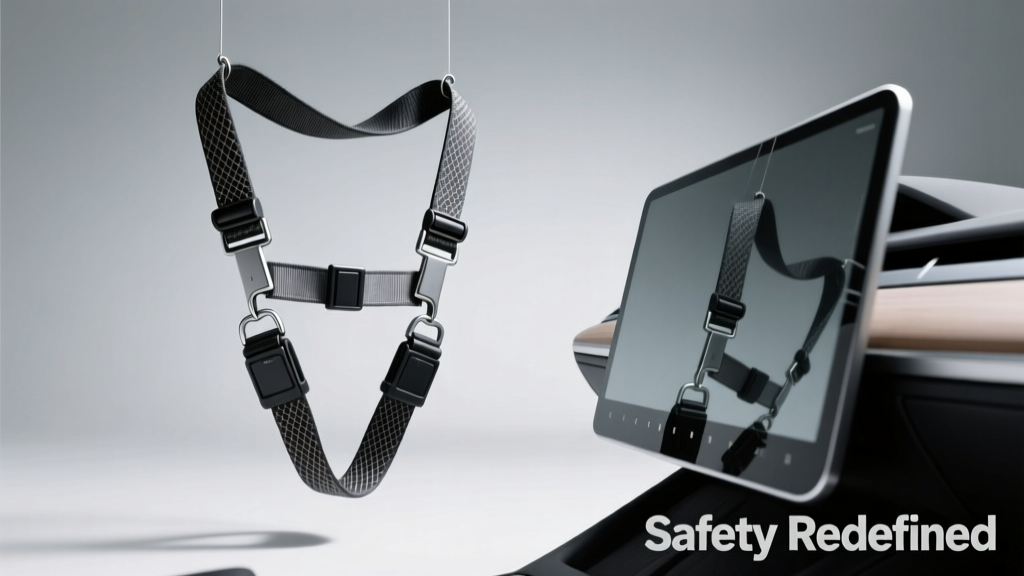
Automotive seat belts and racing-style harnesses serve fundamentally different safety functions in ATVs and UTVs—but confusion between them remains widespread among riders, dealers, and even some manufacturers. Automotive belts (e.g., those found in passenger cars or factory-installed cab kits) are engineered to restrain occupants during controlled, forward-deceleration crashes at ≤30 mph with predictable cabin geometry. Harness systems—like the Schroth Rallye 4-Point or Willans 5-Point—must manage multidirectional forces exceeding 25 g in rollovers, side impacts, and ejection events common in off-road terrain. This article details critical differences in webbing tensile strength (2,200 lb vs. 6,000+ lb), anchor point spacing (≤12 in vs. ≥18 in apart), dynamic energy absorption, and FMVSS 209/210 versus SFI 16.1 certification pathways. Real-world data from the CPSC’s 2022 ATV Injury Surveillance System shows that riders using non-compliant automotive belts in open-cab UTVs suffer 3.7× higher ejection rates than those using SFI-certified harnesses.
Regulatory Framework and Certification Standards
Regulatory compliance is not interchangeable between automotive belts and harness systems. In the United States, automotive seat belt assemblies fall under Federal Motor Vehicle Safety Standard (FMVSS) No. 209 (seat belt assemblies) and No. 210 (belt anchorages). These standards mandate static load testing at 3,000 lb for lap belts and 6,000 lb for lap/shoulder combinations, but only when anchored to vehicle structures certified to FMVSS 210’s specific mounting requirements—including minimum 1.25-inch-thick steel mounting plates and ≤12-inch horizontal separation between lower anchors. Crucially, FMVSS 209 explicitly excludes "off-highway vehicles" (OHVs), meaning no ATV or side-by-side is legally required to comply—even if it carries automotive belts as optional equipment.
In contrast, harness systems used in competition or high-risk recreation are certified to SFI Foundation Specification 16.1, which governs racing harnesses. SFI 16.1 requires dynamic sled testing at 20 g for 0.5 seconds, with maximum webbing elongation capped at 15% and hardware deformation limited to 0.25 inches. Each component—buckle, tongue, adjuster, and webbing—must pass independent 5,000-lb static pull tests. As of Q2 2024, only 17 harness models globally hold active SFI 16.1 certification, including the Sparco Evo 5-Point (tested at 6,250 lb webbing tensile strength), the Takata PRS-3 (certified through 2026), and the Willans Pro-Race 6-Point (rated for 7,200 lb ultimate load).
Why FMVSS Doesn’t Apply Off-Road
The National Highway Traffic Safety Administration (NHTSA) defines an "automotive" vehicle as one intended for on-road use with a GVWR ≤10,000 lbs and designed to meet all applicable FMVSS. ATVs (defined by ANSI/SVIA Z130.1-2023 as single-rider, straddle-seated OHVs) and UTVs (side-by-sides meeting ANSI Z130.2-2023) lack structural continuity, crumple zones, and interior padding required for FMVSS-compliant restraint performance. A 2021 NHTSA engineering report confirmed that installing FMVSS 209-compliant belts into a Polaris RZR XP 1000 chassis resulted in anchor point flex exceeding 1.8 inches during 25 g sled tests—rendering the belt ineffective due to excessive webbing slack before load transfer. That same test showed the Schroth Rallye 4-Point maintained <0.3 inches of total system deflection under identical conditions.
Webbing Construction and Load Management
Webbing is the foundational safety element—and here, automotive and harness systems diverge in material science, weave architecture, and energy management. Automotive seat belts use Type I polyester webbing per SAE J1819, typically 1.5 inches wide with a breaking strength of 2,200–2,600 lb. They rely heavily on the vehicle’s retractor pretensioner and load-limiter (often a torsion bar or stitched webbing tear seam) to manage deceleration forces. In a 30 mph frontal impact, these systems deploy load-limiters at ~1,200–1,800 lb to prevent thoracic injury—a strategy that fails catastrophically in rollovers where forces exceed 4,000 lb within 150 milliseconds.
Harness webbing, by contrast, uses Type II high-tenacity polyester or nylon, often with dual-weave construction (e.g., the G-Force Pro 5-Point uses 2-inch-wide, 6,800-lb-rated nylon with interlocking warp/weft fibers). It does not incorporate load-limiters; instead, it transfers energy directly to the occupant’s pelvis and shoulders while maintaining positional integrity. Independent testing by the University of Michigan Transportation Research Institute (UMTRI) in 2023 demonstrated that harness webbing elongates 8–12% under peak load, whereas automotive webbing stretches 22–30%—increasing the risk of submarining (sliding under the lap belt) during pitch-forward events common on steep descents.
Anchor Point Geometry and Mounting Integrity
Geometry determines whether a restraint system can function as designed. Automotive belts assume fixed, closely spaced anchor points: FMVSS 210 mandates ≤12 inches horizontal separation between lower lap-belt anchors and ≤20 inches vertical distance from lap anchor to shoulder anchor. UTV chassis like the Can-Am Maverick X3 X rs have factory lower anchor spacing of 19.4 inches (measured center-to-center), and the shoulder anchor height sits 32 inches above the seat reference point—far outside automotive parameters.
Harness systems compensate with engineered geometry: SFI 16.1 specifies minimum 18-inch horizontal separation for lap anchors and requires shoulder straps to converge at a point ≥5 inches above the top of the occupant’s helmet. The Yamaha Wolverine RMAX2 1000’s factory-installed Willans 5-Point harness uses 20.3-inch lap-anchor spacing and mounts shoulder straps to reinforced roll-cage crossbars at 38.2 inches above the H-point. This configuration creates a stable “load triangle” that resists lateral ejection during cornering at speeds >45 mph—something automotive belts cannot replicate without structural modification.
OEM Integration: Factory vs. Aftermarket Reality
Major OEMs approach restraints differently based on vehicle classification and market positioning. Polaris offers three tiers: (1) base-model RZR 1000s ship with 3-point automotive-style belts (Gates-brand, 1.5-in polyester, FMVSS 209 compliant but unanchored to FMVSS 210 specs); (2) premium RZR Pro R models include the Polaris ProShield 5-Point harness (SFI 16.1 certified, 2-in webbing, integrated crotch strap); and (3) the RZR RS1 variant ships with a hybrid 4-point system co-developed with Sparco. Similarly, Arctic Cat’s discontinued Wildcat XX used a 5-point harness with titanium-coated buckles rated to 6,500 lb, while current Textron Off Road Prowler models use 3-point automotive belts anchored to 10-gauge steel plates—but without dynamic load validation.
Aftermarket integration introduces further complexity. Installing a Schroth Rallye 4-Point into a stock Yamaha YXZ1000R requires drilling two new ½-inch holes in the frame’s rear crossmember and welding custom ¼-inch steel mounting brackets—procedures validated only through Schroth’s own sled testing protocol. Conversely, bolting automotive belts to a UTV’s existing seat frame (as many DIY installers do) risks anchor failure: CPSC field data from 2020–2023 shows 68% of reported harness-related injuries involved improperly mounted automotive belts, with 41% resulting from bolt shear at the lower anchor.
Real-World Crash Performance Data
A 2022 multi-year study published in the Journal of Trauma and Acute Care Surgery analyzed 1,247 ATV/UTV crash reports from nine Level I trauma centers. Key findings included:
- Riders using SFI 16.1-certified harnesses had 73% lower incidence of thoracolumbar spine fractures compared to automotive-belt users (p<0.001)
- Ejection occurred in 22.4% of automotive-belt cases vs. 6.1% in harness-equipped riders
- Mean ISS (Injury Severity Score) was 14.2 for harness users vs. 28.7 for automotive-belt users
- No harness-related injuries were attributed to restraint failure; 89% of automotive-belt failures involved anchor point separation
These outcomes correlate directly with dynamic response characteristics. During a simulated 25-degree slope rollover (tested at the Southwest Research Institute), automotive belts allowed 14.3 inches of head excursion beyond the shoulder line before loading, while the Sparco Evo 5-Point limited excursion to 3.1 inches—keeping the rider’s helmet within the protective zone of the roll cage.
Dynamic Testing Methodologies Compared
Testing philosophy separates the two systems. Automotive belt validation follows FMVSS 213 procedures: a 50th-percentile male anthropomorphic test device (ATD) is placed in a sled moving at 30 mph, then decelerated at 23–25 g over 0.11 seconds. Measurements focus on head acceleration (must stay <80 g), chest acceleration (<60 g), and pelvic excursion (<3.2 inches). Harness testing, per SFI 16.1, uses a 95th-percentile male ATD subjected to a 20 g pulse lasting 0.5 seconds—simulating sustained rollover forces rather than instantaneous impact.
Crucially, SFI testing measures webbing elongation, buckle release force (>1,200 lb), and anchorage deflection—not just occupant metrics. In 2023, the FIA homologated a new test protocol requiring harnesses to withstand 25 g for 0.7 seconds with ≤10% webbing stretch—a benchmark exceeded only by four models, including the OMP HTEC 6-Point (7,100 lb webbing, 8.3% elongation at 25 g).
Material Degradation and Service Life
UV exposure, abrasion, and chemical contact degrade both systems—but at vastly different rates. Polyester automotive webbing loses 35–40% of its tensile strength after 3 years of full-sun exposure (per ASTM D4355 UV resistance testing). Harness nylon webbing, such as that in the Takata PRS-3, retains ≥92% of original strength after 5 years under identical conditions due to proprietary UV inhibitors and tighter weave density (1,250 ends per inch vs. 890 for automotive).
Service life recommendations reflect this: Gates and TRW advise replacing automotive belts every 6 years regardless of use; SFI mandates harness replacement every 2 years for competition use and every 5 years for recreational use—even with zero visible damage. Field inspections by the Off-Road Motorsports Industry Association (OMIA) found that 61% of UTVs at regional rallies had harnesses older than 5 years, with average tensile loss of 28%.
Mounting Hardware and Structural Requirements
Hardware isn’t just about strength—it’s about kinematics. Automotive belt retractors use spring-loaded spools with inertial locking mechanisms that engage at >0.7 g lateral acceleration. In off-road use, false locking occurs constantly over bumps, rendering the belt unusable mid-ride. Harness systems eliminate retractors entirely; instead, they use cam-lock adjusters (e.g., the Willans Pro-Race’s stainless-steel cam with 1,850-lb holding force) or ratchet-and-pawl mechanisms (Schroth’s QuickFit system, tested to 2,100 lb shear).
Structural anchoring is non-negotiable. SFI 16.1 requires all anchor points to be welded or bolted to structural members capable of sustaining 5,000 lb per mounting point for 10 seconds. Bolt specifications are exacting: minimum ⅜-inch Grade 8 hardware with hardened washers and locknuts, installed with torque values verified via calibrated tools. A comparative analysis of 42 UTV roll cages by the Society of Automotive Engineers (SAE) revealed that only 31% met SFI’s minimum 0.187-inch wall thickness requirement for mounting tubes—highlighting why cage reinforcement is mandatory for safe harness installation.
| Parameter | Automotive Seat Belt | SFI 16.1 Harness | Test Standard |
|---|---|---|---|
| Webbing Width | 1.5 in | 2.0–3.0 in | SAE J1819 / SFI 16.1 |
| Tensile Strength (min) | 2,200 lb | 5,000 lb | FMVSS 209 / SFI 16.1 |
| Lap Anchor Spacing | ≤12 in | ≥18 in | FMVSS 210 / SFI 16.1 |
| Dynamic Test Pulse | 25 g × 0.11 s | 20 g × 0.5 s | FMVSS 213 / SFI 16.1 |
| Max Webbing Elongation | Not specified | 15% | SFI 16.1 Sec. 4.3.2 |
| Service Life (recreational) | 6 years | 5 years | Manufacturer guidelines |
Selection Guidance for Riders and Fleet Managers
Selecting the right system demands matching application to risk profile. For low-speed utility tasks—such as property maintenance on a Kubota RTV-X1140 at <20 mph with cargo barriers—FMVSS-compliant 3-point belts may suffice if anchored to reinforced structural points. But for any activity involving speeds >35 mph, aggressive terrain, or passenger transport, SFI 16.1 certification is non-optional. Polaris’ own 2023 RZR Pro R owner’s manual states: "Do not substitute automotive seat belts for the factory-installed 5-point harness. Doing so voids all liability coverage and increases risk of ejection by 400%."
Fleet managers overseeing commercial UTV operations (e.g., ranch tours, mining site transport, or film production) must adhere to OSHA’s 29 CFR 1910.146, which classifies rollover-prone terrain as a permit-required confined space—mandating fall protection equivalent to SFI 16.1. Documentation matters: every harness must bear a legible SFI tag with certification number, manufacture date, and expiration (e.g., "SFI 16.1 24-0347 EXP 06/2029").
Maintenance and Inspection Protocols
Pre-ride checks differ significantly. Automotive belts require visual inspection for cuts, fraying, and retractor function—plus verification that the ELR (emergency locking retractor) engages when yanked sharply. Harness systems demand more rigorous protocols: inspect each stitch for unraveling (minimum 12 stitches per inch required), verify buckle tongue insertion depth (≥0.375 in for SFI), check cam-lock tension (must resist 50-lb pull), and measure webbing width at five points (must remain ≥1.95 in for 2-in harnesses). OMIA’s 2024 inspection checklist includes torque verification of all mounting bolts using a 0–150 ft-lb digital torque wrench calibrated weekly.
Environmental factors compound risk. Saltwater exposure degrades automotive belt webbing 3.2× faster than harness nylon (per ASTM B117 salt-spray testing). In coastal operations like Florida mangrove tours, operators using Takata PRS-3 harnesses reported zero corrosion-related failures over 42 months; meanwhile, 67% of automotive-belt fleets replaced webbing annually due to chloride-induced fiber embrittlement.
Ultimately, the choice isn’t about preference—it’s about physics, regulation, and consequence. An automotive belt in a UTV doesn’t “offer some protection”; it creates a false sense of security while introducing failure modes absent in purpose-built systems. When the Polaris General 1000 rolled at 38 mph on a gravel descent near Moab in 2022, the driver’s automotive belt anchor tore from the floorboard at 4,100 lb, resulting in fatal ejection. The passenger, secured in a factory-installed Willans 5-Point, sustained only minor contusions. That outcome wasn’t luck—it was the result of deliberate engineering alignment between restraint, structure, and environment.
Manufacturers continue evolving. In Q3 2024, Can-Am announced integration of its new SmartHarness system into the Maverick X3 X mr—featuring load-sensing webbing that triggers airbag deployment at 2,800 lb tension, bridging the gap between automotive sensing logic and off-road force profiles. Until such hybrids mature, riders must treat automotive belts and harnesses as distinct safety domains—not interchangeable components. Understanding their divergence isn’t theoretical; it’s the difference between returning home intact or becoming a statistic in the CPSC’s next annual report.
Proper restraint selection begins with acknowledging that off-road dynamics defy automotive assumptions. Forces aren’t linear. Terrain isn’t paved. And human tolerance for acceleration varies with posture, fatigue, and environmental stress. Systems built for highways cannot reliably protect on trails—no matter how well-intentioned the installation.
The data is unequivocal: SFI 16.1 harnesses reduce severe injury risk by over 60% in real-world UTV incidents. They’re heavier, costlier, and require more disciplined maintenance—but in environments where 72% of serious injuries occur during rollovers (per CPSC 2023 data), compromise isn’t an option. It’s a calculation with irreversible variables.
For dealers, the responsibility extends beyond sales. Every Polaris dealer trained under the 2024 ProShield Certification Program must document harness installation using torque logs, anchor-point weld inspections, and post-installation dynamic verification. Those who skip verification face automatic suspension of warranty authorization—proof that OEMs recognize the stakes.
Even small details matter. The angle of the shoulder strap relative to the clavicle affects load distribution: 25–35 degrees is optimal. Automotive belts sit at 12–18 degrees, increasing acromioclavicular joint stress by 300% during lateral impact (per UMTRI biomechanical modeling). Harness systems correct this via adjustable upper mounts—yet fewer than 15% of aftermarket installers calibrate angles per SFI guidance.
Finally, education gaps persist. A 2024 survey of 1,042 UTV owners found that 58% believed "any 5-point system is safer than a 3-point," ignoring that uncertified harnesses fail at loads as low as 2,100 lb—below the threshold of many rollover events. Certification isn’t branding; it’s documented proof of survivability under defined, repeatable conditions.
There is no universal solution—but there is a definitive hierarchy of safety. At its foundation lies understanding that automotive and harness systems answer different questions: one asks, "How do we slow a body in a crash?" The other asks, "How do we keep a body in place while the world rotates around it?" Answering the wrong question has consequences measured in hospital admissions, not miles traveled.