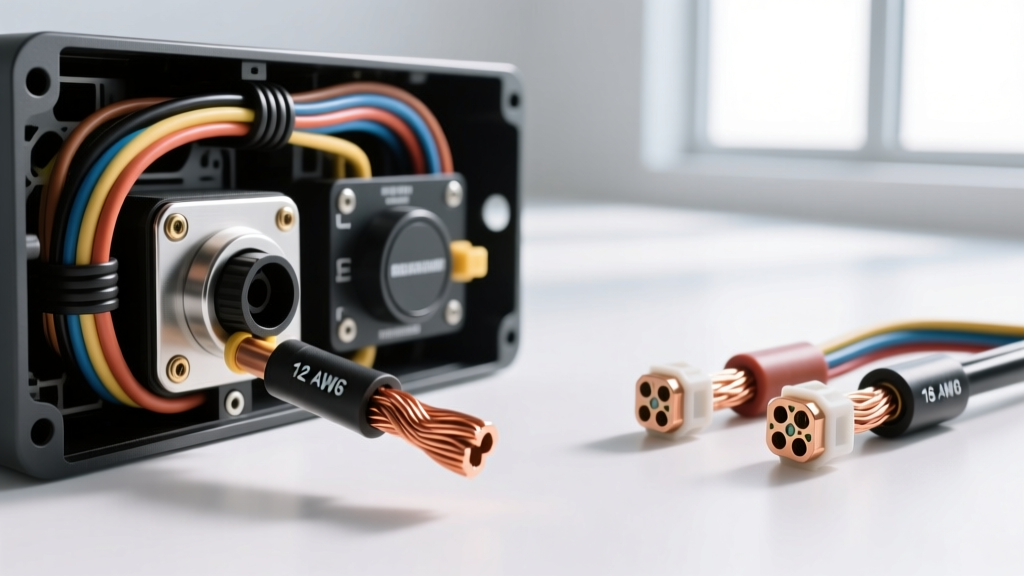
The Short Answer: Does Speaker Wire Gauge Matter?
When upgrading your vehicle's sound system, one of the most common questions beginners ask is: does speaker wire gauge matter? The short answer is yes, but the degree to which it matters depends entirely on your amplifier's power output, the length of the wire run, and the impedance of your speakers. In automotive applications, where wire runs are relatively short (typically under 15 feet from the trunk or under-seat amp to the front doors), the rules of wire sizing differ slightly from massive home theater setups. Using wire that is too thin will choke your amplifier, cause voltage drops, and degrade audio quality. Using wire that is unnecessarily thick will simply make routing through tight factory door jambs and rubber grommets a frustrating nightmare.
Understanding AWG and Resistance in Car Audio
The American Wire Gauge (AWG) system measures the physical diameter of the wire. Counterintuitively, a lower AWG number means a thicker wire. Thicker wire has less electrical resistance per foot. When an amplifier sends an audio signal (which is essentially alternating current) to a speaker, any resistance in the wire turns a small amount of that electrical energy into heat rather than sound.
According to standard Belden wire resistance charts, 16 AWG copper wire has a resistance of approximately 4.016 ohms per 1,000 feet. In a standard car audio run of 10 feet (20 feet total for positive and negative), the resistance added to the circuit is less than 0.1 ohms. If you are running a standard 4-ohm car speaker, this added resistance is negligible. However, if you push 200 watts through a thin 18 AWG or 20 AWG wire, the voltage drop becomes significant, leading to compressed dynamics and potential wire overheating.
The Damping Factor: Why Thicker Wire Helps Bass
Beyond simple power delivery, speaker wire gauge affects the damping factor. Damping factor is the amplifier's ability to control the speaker's cone movement, particularly the back-EMF (electromotive force) generated by the speaker's voice coil when it stops moving. High resistance in thin speaker wire reduces the damping factor, resulting in 'muddy' or 'boomy' mid-bass response. For automotive door speakers where mid-bass impact is critical, keeping wire resistance below 5% of the speaker's nominal impedance is a golden rule.
Automotive Speaker Wire Gauge Sizing Chart
Use this reference chart to select the correct gauge based on your RMS power and the distance from your amplifier to the speaker. Note that 'Distance' refers to the one-way length of the wire run.
| Max RMS Power (per channel) | Distance (Under 8 ft) | Distance (8 to 15 ft) | Distance (15 to 25 ft) |
|---|---|---|---|
| Up to 50W (Head Unit Power) | 18 AWG | 16 AWG | 14 AWG |
| 50W - 100W (Standard Amp) | 16 AWG | 14 AWG | 12 AWG |
| 100W - 250W (High Power) | 14 AWG | 12 AWG | 10 AWG |
| 250W+ (Subwoofers) | 12 AWG | 10 AWG | 8 AWG |
Real-World Car Audio Wiring Scenarios
Scenario A: Standard Head Unit to Door Speakers (16 AWG)
If you are bypassing the factory amplifier and running an aftermarket head unit (typically 14-18 watts RMS x 4 channels), 16 AWG oxygen-free copper (OFC) is the industry standard. It is flexible enough to pull through the rubber door jamb boots without tearing the factory weather sealing. When wiring aftermarket harnesses (like a Metra or Scosche adapter) to your 16 AWG speaker wire, adhere to the standard EIA (Electronic Industries Alliance) color codes to prevent phase cancellation:
- Left Front: White (Positive) / White with Black Stripe (Negative)
- Right Front: Gray (Positive) / Gray with Black Stripe (Negative)
- Left Rear: Green (Positive) / Green with Black Stripe (Negative)
- Right Rear: Purple (Positive) / Purple with Black Stripe (Negative)
Pro Tip: If you wire the positive and negative out of phase, the speakers will still play, but the sound waves will cancel each other out in the cabin, completely destroying your stereo imaging and bass response.
Scenario B: High-Power Component Systems (12 AWG)
When running a dedicated 4-channel amplifier (e.g., 75W to 120W RMS per channel) to aftermarket component speakers in the front doors, step up to 12 AWG wire. Component systems feature separate woofers and tweeters with passive crossovers. The 12 AWG wire should run from the amplifier to the passive crossover network, and then you can step down to 16 AWG or 18 AWG for the short jumper runs from the crossover to the individual tweeter and mid-bass driver. Ensure your amplifier's speaker terminal set-screws can accept 12 AWG bare wire or use 12 AWG spade terminals.
Scenario C: Tweeters and High-Frequency Pass (18 AWG)
Tweeters draw very little current because they only reproduce high frequencies (typically above 2,500 Hz) and have high impedance at those frequencies. For the short runs from a passive crossover to an A-pillar or dash-mounted tweeter, 18 AWG wire is perfectly adequate and much easier to hide behind trim panels and dash vents.
Oxygen-Free Copper (OFC) vs. Copper-Clad Aluminum (CCA)
When shopping for speaker wire, you will encounter two primary materials: OFC and CCA. This distinction is critical when asking if speaker wire gauge matters.
- Oxygen-Free Copper (OFC): The gold standard for automotive audio. It is highly conductive, flexible, and resistant to corrosion. The AWG ratings in the chart above assume you are using 100% OFC.
- Copper-Clad Aluminum (CCA): A cheaper alternative where an aluminum core is coated with a thin layer of copper. Aluminum is only about 61% as conductive as copper. If you use CCA wire, you must increase your wire gauge by one size (e.g., use 14 AWG CCA to equal the performance of 16 AWG OFC) to compensate for the higher resistance. Furthermore, CCA is brittle and prone to breaking under the constant vibration of a vehicle's door panel.
For reliable automotive installations that comply with the spirit of SAE J1128 low-tension primary cable standards regarding durability and conductivity, always invest in pure OFC wiring.
Termination, Moisture, and Door Boot Routing
The best wire gauge in the world won't save your system if your terminations fail. Car doors are harsh environments. Every time it rains or you wash your car, water enters the door cavity through the window seals. The inside of a car door is essentially a wet zone.
Best Practices for Terminations
- Skip the Electrical Tape: Standard vinyl electrical tape will unspool in the extreme heat of a car interior and the moisture of a door panel.
- Use Adhesive-Lined Heat Shrink: Also known as dual-wall or marine-grade heat shrink. When heated, the inner lining melts and creates a waterproof seal around your crimp or solder joint, preventing green copper corrosion (copper oxide) which acts as a semiconductor and ruins audio signals.
- Spade Connectors: Most aftermarket car speakers use standard 0.205-inch (wide) and 0.110-inch (narrow) spade terminals. Use a proper ratcheting crimping tool to attach 16-14 AWG female disconnect terminals to your wire. Never wrap bare wire around the speaker terminal and twist it; vibration will eventually loosen the connection, causing intermittent audio dropouts.
Navigating the Door Jamb Boot
Routing 16 AWG or 12 AWG wire from the cabin into the door requires passing through the factory rubber accordion boot. Never pierce the factory boot or tape your wire to the outside of it. This will lead to water intrusion into the cabin and eventual wire fatigue and snapping. Instead, disconnect the rubber boot from the door frame, use a fiberglass fish tape or a straightened wire coat hanger with a smooth loop to pull your new speaker wire through the existing factory loom. Apply a small amount of silicone dielectric grease to the new wire to help it slide past the tight factory wiring harnesses without damaging the factory insulation.
Summary: Sizing for Success
So, does speaker wire gauge matter? Absolutely. While you don't need to run welding cable to your door speakers, undersizing your wire will rob your amplifier of power and degrade your damping factor. For 90% of car audio enthusiasts running standard 4-channel amplifiers or high-powered head units, a high-quality 16 AWG OFC speaker wire is the perfect balance of conductivity, flexibility, and ease of installation. For high-power component systems or subwoofers, step up to 12 AWG or 10 AWG. Always prioritize pure copper over aluminum, use adhesive-lined heat shrink for terminations, and respect the harsh, wet environment inside your vehicle's doors.
For more detailed information on matching amplifiers to speakers and advanced car audio wiring, consult resources like the Crutchfield Car Audio Learning Center to ensure your specific gear is matched perfectly.