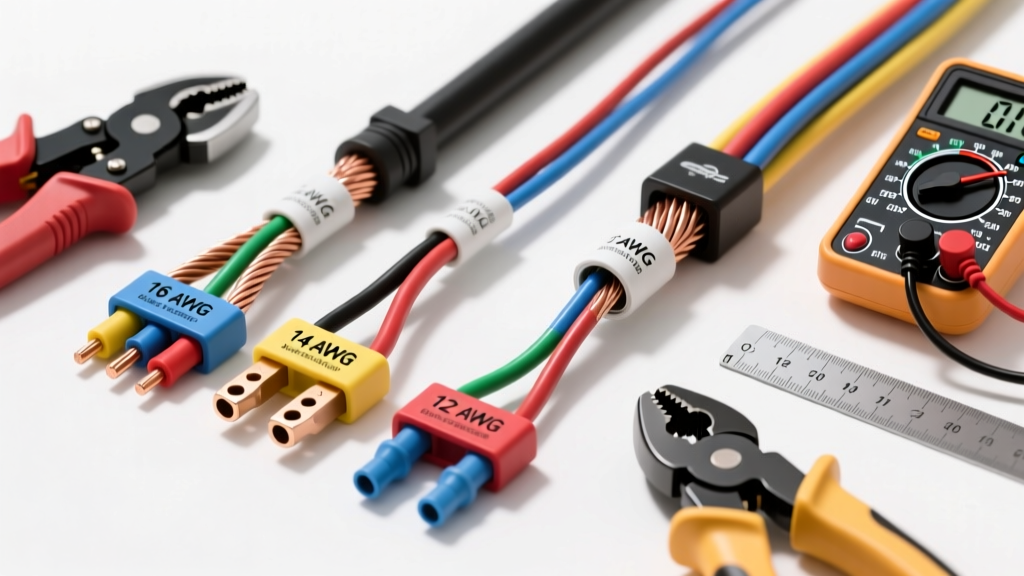
The Economics of Mobile Audio Wiring
When upgrading a vehicle's sound system, enthusiasts often obsess over head unit DACs, amplifier RMS ratings, and speaker sensitivity. However, the physical link between these components—the speaker gauge wire—is frequently an afterthought. Selecting the correct wire gauge and material is not just an electrical necessity; it is a major factor in your project's overall budget and tooling requirements. This analysis breaks down the true cost of automotive audio wiring, comparing material expenses, mandatory termination tools, and the hidden costs of vehicle-specific integration.
Unlike household audio, automotive environments subject wiring to extreme temperature fluctuations, moisture, road salt, and constant vibration. Relying on cheap, undersized wire leads to voltage drop, thermal degradation, and eventual signal failure. Understanding the financial and tooling implications of choosing 16 AWG, 14 AWG, or 12 AWG speaker wire ensures your installation is both economically viable and electrically sound.
Speaker Gauge Wire Specifications and Material Costs
The mobile audio market is flooded with two primary conductor materials: Oxygen-Free Copper (OFC) and Copper-Clad Aluminum (CCA). While CCA is significantly cheaper upfront, its higher resistance and susceptibility to galvanic corrosion make it a poor long-term investment for automotive applications. According to Crutchfield's Mobile Audio Wiring Guide, OFC remains the industry standard for reliable conductivity and longevity in harsh vehicular environments.
| AWG Size | Material | Strand Count | Resistance (Ohms/1000ft) | Est. Cost per Foot | Max Recommended RMS Wattage |
|---|---|---|---|---|---|
| 16 AWG | OFC | 65 | 4.01 | $0.45 - $0.60 | Up to 75W per channel |
| 16 AWG | CCA | 40 | 6.50 | $0.15 - $0.25 | Up to 50W per channel |
| 14 AWG | OFC | 105 | 2.52 | $0.65 - $0.85 | Up to 125W per channel |
| 12 AWG | OFC | 165 | 1.58 | $1.10 - $1.50 | Up to 250W+ per channel |
Note: Resistance values are based on standard Southwire Conductor Specifications at 20°C. Automotive under-hood or door-panel temperatures can increase resistance by up to 15%.
For a standard 4-door sedan requiring roughly 40 feet of wire (10 feet per door run including slack and routing), the material cost difference between 16 AWG CCA ($8) and 16 AWG OFC ($24) is negligible in the grand scheme of a build. However, stepping up to 12 AWG OFC for high-power component systems pushes the raw wire cost to roughly $60, requiring a re-evaluation of your tooling budget.
Mandatory Tooling: Stripping, Crimping, and Sealing
The gauge of your speaker wire directly dictates the tools required for preparation and termination. Improperly stripped or crimped wire introduces resistance at the connection point, negating the benefits of running thicker gauge cables.
Precision Wire Stripping
Standard hardware store combination pliers will crush the fine strands of 16 AWG or 12 AWG OFC wire, reducing the effective cross-sectional area and creating a hot spot. Professional installers rely on automatic wire strippers calibrated for fine-strand audio wire. The Knipex 12 62 180 (approx. $75) or the Jonard ST-500 (approx. $45) are industry favorites. These tools feature precision-machined blades that slice the PVC or XLPE jacket without nicking the copper strands. Budgeting $50-$80 for a quality stripper is a non-negotiable upfront tooling cost that prevents ruined wire and botched terminations.
Ratcheting Crimpers and Terminals
If you are bypassing factory connectors and crimping directly to aftermarket speaker terminals or distribution blocks, a ratcheting crimper is mandatory. Ratcheting mechanisms ensure that the terminal is compressed with the exact same mechanical force every time, preventing loose connections that vibrate apart in a car door. The IWISS IWS-3220M (approx. $45) handles insulated and non-insulated open-barrel terminals from 20 to 12 AWG. Pair this with high-quality brass or tin-plated copper spade terminals (approx. $15 for a box of 100).
Adhesive-Lined Heat Shrink and Harness Looms
Soldering speaker wire in a vehicle is generally discouraged by modern installers due to the time cost and the risk of creating stiff points that snap under door-panel vibration. Instead, adhesive-lined heat shrink is the standard. Products like 3M EPS300 or Wirefy Adhesive Heat Shrink (approx. $25 for a multi-size kit) contain a thermoplastic adhesive that melts and seals the connection against moisture and road salt. Furthermore, any wire passing through a vehicle's A-pillar or door boot must be wrapped in split loom or Tesa tape to prevent chafing against sheet metal.
Hidden Integration Costs: Vehicle-Specific Harnesses
The most overlooked cost in speaker gauge wire budgeting is the vehicle-specific integration hardware. Splicing directly into a modern vehicle's factory wiring harness is a practice that voids warranties and risks damaging CAN-bus systems or factory amplifiers. Instead, professionals use T-harnesses and speaker-specific pigtails.
- Standard Speaker Pigtails (e.g., Metra 72-4500 for Ford/Mazda, 72-4000 for GM): Costing between $5 and $12 per pair, these adapters plug directly into the factory speaker location, allowing you to crimp your new 14 AWG or 16 AWG OFC wire to the pigtail rather than cutting factory wires. For a 4-speaker setup, budget $20-$45 for these adapters.
- Fleece Wiring Tape (Tesa 51036): To prevent the new speaker wire from rattling against the door card or window regulator, the entire run must be wrapped in PET fleece tape. A genuine Tesa 51036 roll costs about $18 and is essential for OEM-level noise reduction.
- Door Boot Pass-Through Tools: Routing thick 12 AWG wire through tight factory rubber door boots requires specialized fish tapes or stiff wire-pulling lubricants (like 3M Silicone Paste, $12) to avoid tearing the weather sealing.
For detailed primary cable standards and insulation requirements in vehicular environments, installers should reference SAE J1128 Low Tension Primary Cable specifications, which outline the thermal and abrasion resistance required for automotive wiring.
Real-World Installation Scenarios and Budgeting
To contextualize these costs, let us examine two common automotive audio upgrade scenarios.
Scenario A: Standard 4-Channel Door Upgrade (16 AWG)
Application: Replacing four factory 6.5-inch coaxial speakers in a 2018 Honda Civic with aftermarket 50W RMS coaxials using the factory head unit's internal amplifier.
Wire Choice: 16 AWG OFC Zip Cord.
Material Cost: 50 feet @ $0.50/ft = $25.00.
Integration Hardware: Metra 72-3950 harnesses (4x $6) = $24.00.
Consumables: Tesa tape and heat shrink = $20.00.
Total Wiring Budget: $69.00 (Assuming the installer already owns basic stripping and crimping tools).
Scenario B: High-RMS Component System (12 AWG)
Application: Running dedicated 12 AWG speaker wire from a trunk-mounted 4-channel amplifier (125W RMS x 4) to a set of high-end front component speakers and rear coaxials in a 2021 Ford F-150.
Wire Choice: 12 AWG OFC (requires heavier duty pulling).
Material Cost: 60 feet @ $1.30/ft = $78.00.
Integration Hardware: Heavy-duty ring terminals for amp distribution, Metra 72-4500 pigtails, and grommets for firewall/cab pass-through = $45.00.
Consumables: Split loom, 3M adhesive heat shrink, silicone pulling lubricant = $35.00.
Tooling Amortization: Upgrading to heavy-duty Knipex strippers and IWISS crimpers = $120.00 (one-time investment).
Total Wiring & Tooling Budget: $278.00.
Expert Sourcing and Verification Standards
When procuring speaker gauge wire, always verify the copper content. Many budget brands label their wire as 'OFC' but actually supply CCA. You can verify this by scraping the cut end of the wire with a utility knife; if a silver/aluminum core is revealed beneath the copper coating, it is CCA. Additionally, ensure the wire jacket is rated for automotive temperatures. Standard household zip cord uses PVC that becomes brittle in freezing weather and melts near under-seat amplifiers. Look for wire jackets rated for at least 105°C, often labeled as SJOOW or compliant with automotive primary wire standards.
Ultimately, the cost of high-quality speaker gauge wire and the proper tooling to terminate it represents a fraction of the total audio system budget. By investing in 14 or 12 AWG OFC wire, precision crimpers, and vehicle-specific harnesses, you ensure that the electrical signal reaches your speakers with zero degradation, maximizing your return on investment and delivering the sound quality your hardware was designed to produce.