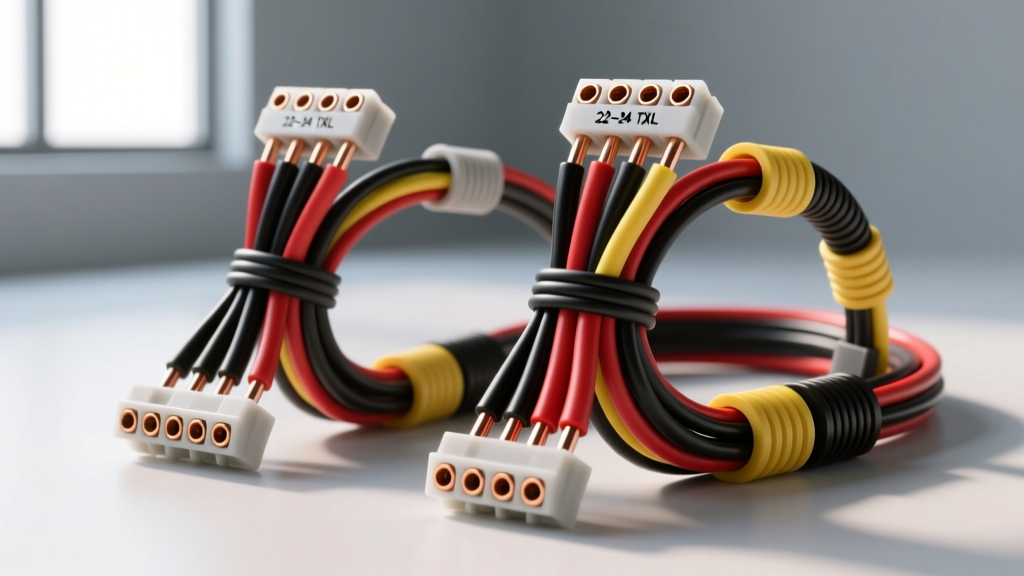
The 'Floral Wire Gauge' Myth in Automotive Wiring
When hobbyists, DIY fabricators, and robotics enthusiasts tackle custom sensor harnesses or low-current automotive circuits, a surprisingly common search query that surfaces is floral wire gauge. In the craft world, floral wire typically ranges from 18 AWG down to 24 AWG, featuring a thin, pliable profile that seems perfect for routing delicate sensor signals like Intake Air Temperature (IAT), Engine Coolant Temperature (ECT), or narrowband O2 sensor reference wires. However, applying craft-grade floral wire to an automotive environment is a critical error that will inevitably lead to signal degradation, short circuits, and stranded vehicles.
This practical installation guide bridges the gap between the search intent for thin-gauge flexible wiring and the harsh realities of under-hood automotive environments. We will explore why floral wire fails, identify the correct automotive equivalents (TXL and GXL cross-linked wires), and provide a master-class installation procedure for extending and repairing 22-24 AWG sensor circuits using proper OEM-style terminals and splicing techniques.
Material Science: Craft Wire vs. TXL/GXL Automotive Wire
Understanding why floral wire gauge specifications do not translate to automotive use requires a look at material science. Floral wire is generally designed for indoor, static, and low-temperature environments. Automotive engine bays subject wiring to extreme thermal cycling, high-frequency vibration, and corrosive chemical exposure.
| Specification | 22 AWG Floral / Craft Wire | 22 AWG TXL Automotive Wire |
|---|---|---|
| Stranding | Solid core or 7-strand | 19 to 65-strand (High-flex) |
| Insulation Material | PVC, Paper, or thin Nylon | Cross-Linked Polyethylene (XLPE) |
| Continuous Temp Rating | 60°C to 80°C (Max) | 125°C (Continuous) |
| Chemical Resistance | Poor (Degrades with oil/coolant) | Excellent (Resists automotive fluids) |
| Vibration Fatigue | High failure (Solid cores snap) | High flex life (Stranded core) |
| Abrasion Resistance | Low (Insulation strips easily) | High (Thin-wall XLPE is tough) |
As outlined in the SAE J1128 Low Tension Primary Cable standard, automotive primary wire must withstand specific abrasion, heat aging, and chemical exposure tests that PVC-insulated floral wire will fail within minutes of contact with a hot exhaust manifold or engine block.
Step-by-Step Installation Guide: Extending a 24 AWG Sensor Circuit
When extending a low-current sensor circuit (such as a 5V reference signal or a thermistor ground), you must maintain the integrity of the signal. Below is the professional procedure for installing proper thin-gauge automotive wire.
Step 1: Selecting the Correct Automotive Equivalent
Discard any floral or craft wire. Instead, source 22 AWG or 24 AWG TXL (Thin-Wall Cross-Linked) wire. TXL wire features a smaller outer diameter than standard PVC wire, allowing you to easily fit multiple conductors into tight OEM connector backshells and corrugated looms. For high-temperature zones (within 12 inches of exhaust components), upgrade to PTFE (Teflon) or Fiberglass-braided 22 AWG wire.
Step 2: Stripping and Prepping Thin-Gauge Wire
Thin-gauge stranded wire is easily nicked by standard wire strippers, which compromises the copper and creates a hot spot. Use a precision thermal wire stripper or a high-quality ratcheting micro-stripper calibrated specifically for 22-24 AWG. Strip exactly 4.0mm to 5.0mm of insulation. Do not twist the strands tightly; keep them parallel to ensure proper insertion into open-barrel crimps.
Step 3: Terminal Crimping for Micro-Connectors
If you are terminating a new connector (such as a Delphi Metri-Pack 150 or Molex MX150), you must use the correct open-barrel crimping tool. A proper automotive terminal crimp consists of two distinct zones:
- Conductor Crimp: The inner tabs fold over the bare 22 AWG copper strands. This must be tight enough to pass a pull-test (minimum 15 lbs of force) without cutting the strands.
- Insulation Crimp (Wire Grip): The outer, larger tabs wrap around the TXL insulation. This provides strain relief, ensuring that engine vibration does not transfer to the delicate conductor crimp.
Step 4: Mid-Harness Splicing (Solder vs. Crimp)
If you are extending an existing sensor wire mid-harness, avoid standard butt connectors, which are too bulky for 22 AWG wire and create rigid failure points. Instead, use Step-Down Solder Sleeves (specifically designed for 24-22 AWG to 22-20 AWG transitions) or parallel open-barrel splices followed by dual-wall adhesive heat shrink. The adhesive lining in the heat shrink is mandatory; it melts and seals the splice against moisture ingress, preventing the copper from oxidizing and altering the resistance of the sensor circuit.
Real-World Application: GM LS Intake Air Temperature (IAT) Sensor
To illustrate the importance of proper gauge and material selection, let us examine a common installation: extending the IAT sensor on a GM LS-based engine swap. The IAT is a thermistor; the PCM sends a 5-Volt reference signal and reads the voltage drop as the sensor's internal resistance changes with temperature.
- Connector Type: Delphi Metri-Pack 150 Series (2-Way Female)
- Pin 1 (Signal): 22 AWG TXL, Yellow
- Pin 2 (Ground): 22 AWG TXL, Black
If a builder uses 22 AWG floral wire with PVC insulation for this extension, the heat radiating from the LS intake manifold will cause the PVC to outgas and become brittle. Furthermore, if the floral wire is solid-core, the vibration of the engine will cause the wire to work-harden and snap inside the loom. This results in an open circuit, triggering a P0113 (IAT Circuit High) diagnostic trouble code and forcing the PCM into a fail-safe fuel map. By using 65-strand 22 AWG TXL wire and sealing the Metri-Pack cavities with silicone ribbed seals, the circuit remains impervious to heat and vibration.
Troubleshooting Thin-Gauge Signal Drops
When working with wire gauges in the 22-24 AWG range, resistance and voltage drop become critical factors, especially if the incorrect wire type was previously installed. Use this decision tree to diagnose thin-gauge sensor failures:
Symptom: Erratic Sensor Readings or 5V Reference Drops
- Cause 1: PVC Insulation Breakdown. If floral wire or standard PVC hook-up wire was used near heat sources, the insulation may be micro-fracturing, allowing the 5V reference to bleed into the engine block ground.
Fix: Cut out the compromised section. Replace with 22 AWG TXL wire and route through a high-temperature fiberglass braided sleeve. - Cause 2: Corrosion at the Crimp Joint. Non-sealed crimps on thin-gauge wire allow capillary action to draw moisture into the copper strands, creating copper oxide (a semiconductor that increases resistance).
Fix: Cut back the wire to clean, shiny copper. Re-crimp using adhesive-lined heat shrink or liquid electrical tape to seal the joint. - Cause 3: Incorrect Wire Grip Crimp. If the terminal's insulation crimp is too loose on 22 AWG wire, engine harmonics will cause the wire to pivot, eventually snapping the strands right behind the conductor crimp.
Fix: Extract the terminal from the connector housing using a Metri-Pack extraction tool. Re-crimp with a die specifically calibrated for the 0.35mm² (22 AWG) wire grip, ensuring the insulation is fully encapsulated.
Expert Takeaways for Harness Builders
The search for floral wire gauge specifications usually stems from a desire to find thin, flexible, and easy-to-route wiring for tight spaces. While the physical dimensions of 22-24 AWG floral wire might seem ideal for navigating the dense connector housings of modern ECUs and sensor clusters, the material properties are entirely unsuited for the automotive domain. Always substitute craft wires with SAE J1128 compliant TXL or GXL cross-linked polyethylene wires. By pairing the correct thin-gauge automotive wire with OEM-style micro-crimps and adhesive seals, you ensure that your custom sensor harnesses will survive the extreme thermal and mechanical stresses of the road. For further reading on terminal extraction and connector systems, refer to the Aptiv (formerly Delphi) Connection Systems catalog to verify cavity sizes and wire grip specifications for your specific ECU plugs.