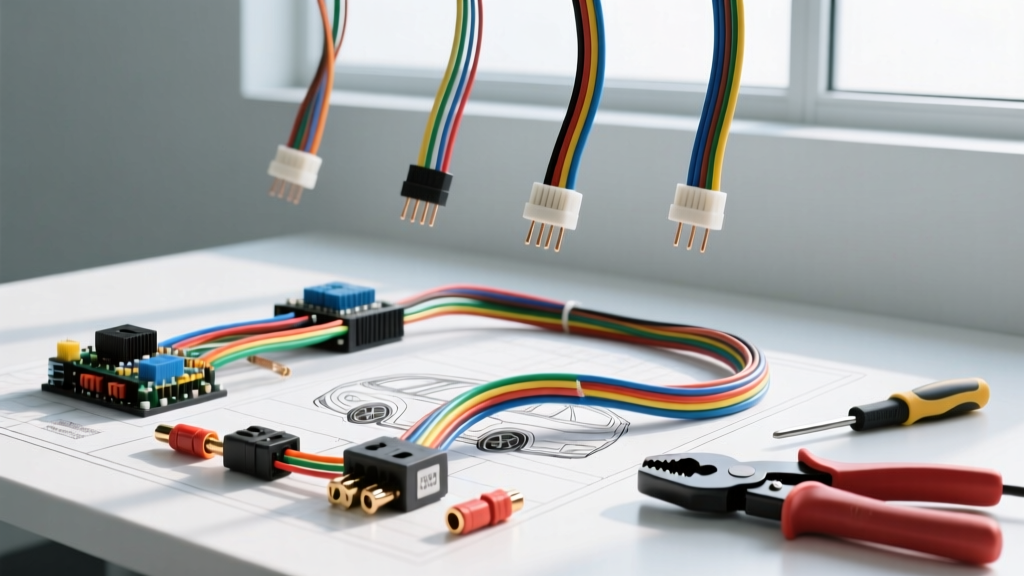
The Intersection of Wire Gauge Dimensions and Project Budgets
When engineering an automotive electrical system, whether for a standalone EFI harness, a custom CAN-bus network, or a high-current charging upgrade, understanding wire gauge dimensions is only half the battle. The physical dimensions of the wire—specifically the conductor cross-section, strand count, and insulation outer diameter (OD)—directly dictate the tooling required to terminate it and the overall material cost of the project. A mismatch between your wire gauge dimensions and your crimping or stripping tools will result in failed pull-tests, increased electrical resistance, and eventual thermal failure.
This analysis breaks down the true cost of automotive wiring projects by correlating specific American Wire Gauge (AWG) dimensions with the necessary precision tooling and material expenses, ensuring your budget aligns with OEM-level reliability standards.
Material Cost Breakdown by AWG and Insulation Type
Automotive wire is primarily categorized by SAE standards, with GXL (General Cross-Linked) and TXL (Thin Cross-Linked) being the most common for modern engine bays due to their high temperature resistance (up to 125°C) and reduced insulation OD compared to older PVC wires. The wire gauge dimensions of GXL allow for tighter conduit routing, but the cross-linked polyethylene (XLPE) insulation requires specific stripping blade geometries to avoid nicking the copper strands.
| AWG Size | Cross-Section (mm²) | Strand Count | Nominal Conductor OD (mm) | GXL Insulation OD (mm) | Avg Cost per 100ft (USD) |
|---|---|---|---|---|---|
| 20 AWG | 0.50 | 19 | 0.94 | 1.40 | $14.50 |
| 18 AWG | 0.80 | 16 | 1.12 | 1.65 | $16.00 |
| 16 AWG | 1.30 | 19 | 1.45 | 2.00 | $19.50 |
| 14 AWG | 2.00 | 41 | 1.83 | 2.45 | $24.00 |
| 12 AWG | 3.00 | 41 | 2.24 | 2.95 | $32.00 |
| 10 AWG | 5.00 | 41 | 2.84 | 3.65 | $48.00 |
Note: Costs reflect high-quality, OEM-spec GXL copper wire (e.g., TE Connectivity or equivalent SAE J1128 compliant wire). Copper Clad Aluminum (CCA) is cheaper but strongly discouraged for automotive use due to galvanic corrosion and lower ampacity.
Tooling Requirements Dictated by Wire Gauge Dimensions
The most common point of failure in custom automotive harnesses is the crimp. The terminal barrel is engineered to deform around specific wire gauge dimensions. If the tooling does not precisely match the combined dimensions of the conductor and insulation, the crimp will fail the USCAR-21 minimum pull-out force requirements.
Precision Stripping: Insulation OD vs. Conductor Diameter
Standard hardware store wire strippers rely on shear-cut holes that often crush the fine strands of flexible automotive wire. Because GXL and TXL wires have thinner, harder XLPE insulation, using a standard shear stripper can easily nick the 19 or 41 copper strands. A nicked strand reduces the effective cross-sectional area, creating a high-resistance hot spot.
- Entry-Level Tool: Ideal 45-122 Automatic Wire Stripper (~$45). Features adjustable tension to handle the specific insulation OD of 18-10 AWG GXL without crushing strands.
- Professional Tool: Schleuniger StripMaster or Amada Miyachi thermal strippers ($800+). Thermal strippers use a heated blade to melt the XLPE insulation away from the copper, guaranteeing zero strand damage regardless of wire gauge dimensions. This is mandatory for aerospace and high-end motorsport harnesses.
Crimper Die Sizing and Terminal Barrel Matching
Open-barrel terminals (used in Weather-Pack, Metri-Pack, and Bosch connectors) require a specific crimp profile. The conductor crimp wings must fold tightly around the bare wire strands, while the insulation crimp wings must secure the jacket without piercing it.
According to SAE J1128 and USCAR-21 specifications, the crimp must achieve specific pull-out forces based on wire gauge dimensions:
- 20-18 AWG (0.5 - 0.8 mm²): Minimum 50 Newtons (11.2 lbs) pull-out force.
- 16-14 AWG (1.3 - 2.0 mm²): Minimum 80 Newtons (18.0 lbs) pull-out force.
- 12-10 AWG (3.0 - 5.0 mm²): Minimum 120 Newtons (27.0 lbs) pull-out force.
To achieve these forces, a ratcheting crimper with interchangeable dies is required. A high-quality ratcheting tool like the TE Connectivity CERTI-CRIMP II (~$450) ensures the tool will not release until the exact dimensional compression is achieved. Budget manual crimpers ($30-$50) rely on user grip strength and lack dimensional feedback, frequently resulting in under-compressed (high resistance) or over-compressed (work-hardened and brittle) terminals.
Automotive Connector Ecosystems and Gauge Limits
Wire gauge dimensions also dictate which connector ecosystems you can utilize. The silicone weather seals used in automotive connectors are sized to grip the specific insulation OD of the wire. If you use a wire with an oversized PVC jacket instead of thin-wall GXL, the seal will not fit into the connector cavity, or it will bind and push out during mating.
| Connector System | Accepted Wire Gauge Dimensions (AWG) | Seal OD Tolerance (mm) | Required Crimp Tooling Investment |
|---|---|---|---|
| Delphi Weather-Pack | 10 - 20 AWG | 1.40 - 3.60 | $80 (Manual) / $350 (Ratcheting) |
| Delphi Metri-Pack 2.8 | 10 - 18 AWG | 1.65 - 3.65 | $120 (Manual) / $450 (Ratcheting) |
| TE Superseal 1.5 | 14 - 20 AWG | 1.40 - 2.45 | $90 (Manual) / $380 (Ratcheting) |
| Deutsch DT Series | 14 - 20 AWG (Solid/Stranded) | 1.50 - 2.60 | $150 (Manual) / $600 (Pneumatic) |
Real-World Budgeting: Standalone EFI Harness Build
To illustrate how wire gauge dimensions impact a real-world budget, let us analyze the material and tooling costs for building a custom 24-circuit harness for a Holley Terminator X V8 EFI system. This harness requires handling low-amperage 5V sensor references, medium-amperage injector signals, and high-amperage main power feeds.
Material Specifications and Costs
- 5V References & Sensors (MAF, TPS, IAT): 20 AWG GXL (0.5 mm²). Color codes: Dark Green (5V Ref), Light Green (Signal), Black/White (Sensor Ground). Cost: 100ft @ $14.50
- Injector & Coil Drivers: 18 AWG GXL (0.8 mm²). Color codes: White/Blue (INJ 1), White/Green (INJ 2), Pink (Coil 12V). Cost: 200ft @ $32.00
- Main Relay Power & Grounds: 12 AWG GXL (3.0 mm²). Color codes: Red (Battery +), Black (Chassis Ground). Cost: 50ft @ $16.00
- Connectors: 4x Metri-Pack 2.8 4-way (Coils), 2x Weather-Pack 10-way (ECU bulkhead), assorted cavity plugs and seals. Cost: ~$85.00
- Conduit & Taping: 1/4" and 3/8" split loom, Tesa 51036 PET cloth tape. Cost: $45.00
- Total Material Cost: ~$192.50
Tooling Investment Analysis
If you are building a single harness, the tooling cost will vastly outweigh the material cost. However, investing in tools calibrated to exact wire gauge dimensions prevents the catastrophic cost of a melted ECU pin or an engine stall due to a backed-out terminal.
- Ratcheting Crimper Set: IWISS IWS-1424AM (Covers Metri-Pack and Weather-Pack open barrel terminals for 20-10 AWG). Cost: $65.00 (Excellent budget alternative to OEM TE tooling for DIYers).
- Precision Strippers: Knoweasy Automatic Wire Stripper (calibrated for thin-wall GXL). Cost: $25.00
- Seal Insertion Tool & Pin Removal Tools: Essential for Metri-Pack 2.8 to avoid damaging the silicone seals during assembly. Cost: $15.00
- Total Tooling Cost: ~$105.00
For a professional harness builder, upgrading to the TE Connectivity CERTI-CRIMP ratcheting platform with specific die sets for Metri-Pack 2.8 and Weather-Pack terminals will increase the tooling budget to approximately $1,200, but guarantees USCAR-compliant pull-out forces across all wire gauge dimensions on every single crimp.
Summary
Wire gauge dimensions are the foundational metric of any automotive electrical project. The cross-sectional area determines current capacity, while the insulation OD and strand count dictate the exact tooling required for reliable termination. By budgeting for high-quality GXL/TXL wire and precision ratcheting crimpers matched to your specific connector ecosystem, you eliminate the hidden costs of electrical gremlins, voltage drops, and terminal failures in the harsh, high-vibration environment of an engine bay.