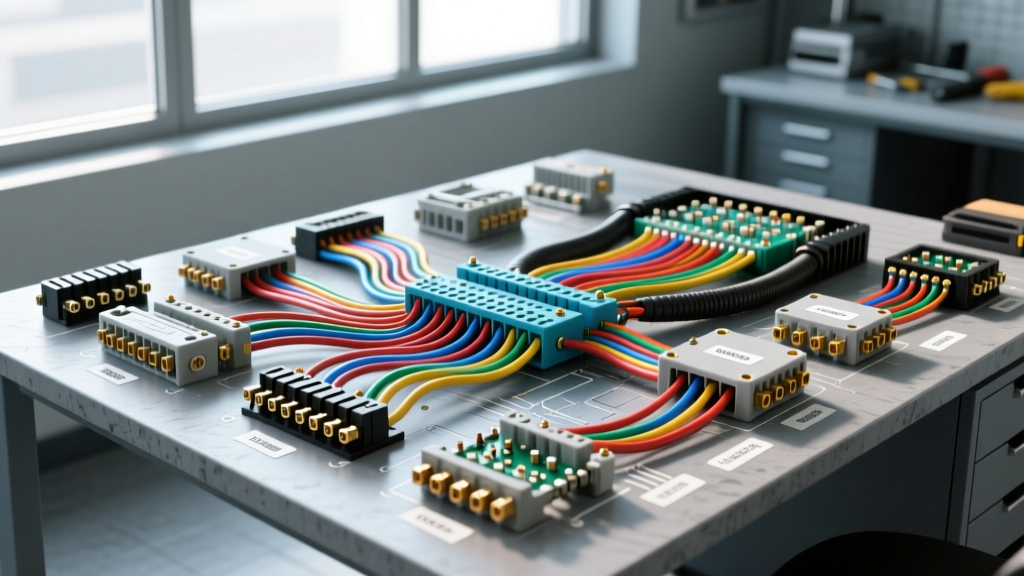
The Professional Benchmark: Black Hills Auto Electric Standards
When evaluating the operational standards of premier regional repair facilities, Black Hills Auto Electric serves as a benchmark for heavy-duty, agricultural, and light-duty automotive electrical diagnostics. Operating in rugged environments where equipment downtime translates to massive financial losses, top-tier auto electric shops rely on a precise combination of advanced diagnostic tooling, SAE-compliant wiring materials, and rigorous testing protocols. For DIY enthusiasts and independent mechanics looking to elevate their electrical repair capabilities, understanding the cost and tool requirements of a professional-grade auto electrical bench is essential.
This comprehensive cost and tool analysis breaks down the exact equipment, wiring specifications, and labor benchmarks required to diagnose and repair complex 12V and 24V charging, starting, and CAN-bus networks, mirroring the standards upheld by professional facilities like Black Hills Auto Electric.
Core Diagnostic Tooling Requirements & Capital Costs
Professional auto electricians do not rely on basic test lights or cheap digital multimeters (DMMs) for modern vehicle diagnostics. The electrical architecture of modern vehicles, particularly heavy-duty trucks equipped with J1939 CAN-bus networks, requires high-speed data capture and precise voltage drop analysis.
Automotive Oscilloscopes and Graphing Multimeters
The cornerstone of any professional auto electric shop is a high-bandwidth automotive oscilloscope. While a standard Fluke 88V Automotive Multimeter (approx. $550) is mandatory for baseline voltage drop and resistance testing, it cannot capture microsecond voltage spikes or alternating current (AC) ripple from a failing alternator diode trio.
- PicoScope 4425A (approx. $1,600): The industry standard for capturing CAN-bus waveforms, injector pulse widths, and relative compression waveforms. It allows technicians to verify the 60-ohm termination resistance and 2.5V/2.5V bias voltages on J1939 networks without unplugging connectors.
- Fluke 88V (approx. $550): Used for precision voltage drop testing. SAE standards dictate that a healthy starter circuit should exhibit less than 0.5V drop on the positive supply side and less than 0.1V on the negative ground side under full cranking load.
Heavy-Duty Load and Conductance Testers
Testing high-amperage alternators (such as the Delco Remy 28SI or 39SI series, which can output up to 300A) requires specialized carbon pile load testers and high-capacity conductance testers. A Midtronics CPX900 or equivalent heavy-duty tester (approx. $900) is required to accurately measure the cold cranking amps (CCA) and internal resistance of multiple parallel battery banks found in heavy equipment.
Wiring, Crimping, and Consumables Cost Analysis
A critical differentiator between amateur repairs and professional Black Hills Auto Electric-tier work is the adherence to SAE J1128 wiring standards. Using primary wire from a local hardware store leads to rapid insulation degradation, galvanic corrosion, and voltage drop under high-temperature hood conditions.
GXL vs. TXL Cross-Linked Polyethylene Wire
Professional shops exclusively use GXL (thin-wall) or TXL (extra-thin-wall) cross-linked polyethylene (XLPE) insulated wire. This insulation resists under-hood temperatures up to 125°C (257°F) and resists chemical degradation from oil and battery acid far better than standard PVC wire.
| Wire Gauge (AWG) | SAE J1128 Type | Typical Application | Est. Cost per 100ft |
|---|---|---|---|
| 18 AWG | TXL | CAN-bus, ECU sensors, 5V reference | $18.00 |
| 14 AWG | GXL | Lighting circuits, injector power | $28.00 |
| 10 AWG | GXL | High-current sensors, ABS modules | $45.00 |
| 4 AWG | SGT (Battery Cable) | Starter positive, heavy-duty ground | $110.00 |
| 1/0 AWG | SGT (Battery Cable) | Alternator B+ to battery positive | $220.00 |
Terminal Crimping and Connector Systems
Proper crimping is non-negotiable. A failed crimp introduces resistance, which generates heat and leads to connector melt-down. Professional shops invest heavily in ratcheting crimpers and OEM-style connector kits.
- Deutsch DT Series (2, 3, 4, 6, 8, 12-pin): The standard for heavy-duty sensor and actuator connections. Requires a dedicated Deutsch wedge and contact crimp tool (approx. $150). Terminals must be crimped using a 4-indent die to ensure a gas-tight connection.
- AMP Superseal 1.5 & Molex MX150: Common in light-duty ECU and transmission harnesses. Requires specific ratcheting crimpers to handle the 18-20 AWG wire and secondary locking wedges.
- Adhesive-Lined Heat Shrink: All open-splice repairs must be sealed with dual-wall, polyolefin heat shrink containing an inner layer of hot-melt adhesive to prevent moisture intrusion and capillary wicking.
Labor vs. DIY: Complex Circuit Overhaul Cost Analysis
When should a vehicle owner attempt a DIY repair versus taking the vehicle to a professional facility like Black Hills Auto Electric? The decision often comes down to the complexity of the circuit and the cost of specialized tooling versus professional labor rates.
Scenario: High-Amp Alternator and Starter Circuit Rebuild
Consider a heavy-duty truck experiencing intermittent starting issues and battery drain. The root cause is often a combination of a failing alternator diode trio (causing AC ripple) and high resistance in the starter B+ cable.
| Repair Phase | DIY Approach (Cost & Risk) | Professional Shop Approach (Cost & Standard) |
|---|---|---|
| Diagnostics | $50 (Basic DMM). Misses AC ripple and microsecond voltage drops. | $150/hr labor. Uses PicoScope to verify alternator AC ripple is < 50mV and performs precise voltage drop mapping. |
| Wiring Replacement | $40 (PVC wire, solder). Solder wicks, creating a stiff wire prone to vibration fatigue and cracking. | $120 (1/0 AWG SGT cable, custom hydraulic crimp lugs, adhesive heat shrink). Ensures flexibility and zero corrosion. |
| Alternator Replacement | $350 (Remanufactured unit). Risk of incorrect clocking or inadequate cooling fin design. | $850 (New Delco Remy 28SI). Bench-tested for 200A+ output, proper M8 B+ terminal torqued to 10-12 Nm. |
| Total Estimated Cost | $440 (High risk of repeat failure due to undiagnosed parasitic draw or CAN-bus interference). | $1,200+ (Guaranteed SAE-compliant repair with long-term reliability in high-vibration environments). |
Advanced Diagnostics: CAN-Bus and Parasitic Draw Protocols
Beyond basic charging systems, modern auto electricians must master network diagnostics and parasitic draw identification. According to Pico Technology's waveform library, diagnosing a faulty module that keeps the CAN-bus awake requires measuring network current rather than just voltage.
J1939 CAN-Bus Verification
Heavy-duty trucks utilize the J1939 protocol. A professional technician will verify the physical layer by measuring the resistance between CAN-H (Pin 6, typically Yellow wire) and CAN-L (Pin 14, typically Green wire) at the diagnostic connector. With the batteries disconnected, the multimeter must read exactly 60 ohms, indicating two 120-ohm terminating resistors in parallel. If the reading is 120 ohms, one terminator is missing; if 0 ohms, the bus is shorted.
Parasitic Draw Testing
Modern vehicles with multiple modules can take up to 45 minutes to enter 'sleep' mode. Amateurs often pull fuses one by one, which wakes the modules back up and invalidates the test. Professional shops use a low-amp current clamp (like the Fluke i410) connected to an oscilloscope to monitor the current draw over an hour without disturbing the circuit. Acceptable sleep-mode draw for a modern heavy-duty truck is typically under 50mA, while light-duty passenger vehicles should drop below 30mA.
Summary of Professional Standards
Emulating the standards of Black Hills Auto Electric requires a shift in mindset from 'parts swapping' to 'circuit verification.' By investing in SAE J1128 compliant GXL/TXL wiring, ratcheting crimp tools for Deutsch and AMP connectors, and advanced oscilloscopes for waveform analysis, technicians can eliminate the 'comeback' repairs that plague amateur electrical work. Whether you are upgrading a fleet of heavy-duty trucks or restoring a classic vehicle's harness, adhering to these tool and material benchmarks ensures electrical systems that survive the harshest operational environments.
For further reading on heavy-duty alternator specifications and bench testing procedures, refer to the Delco Remy technical documentation portal.