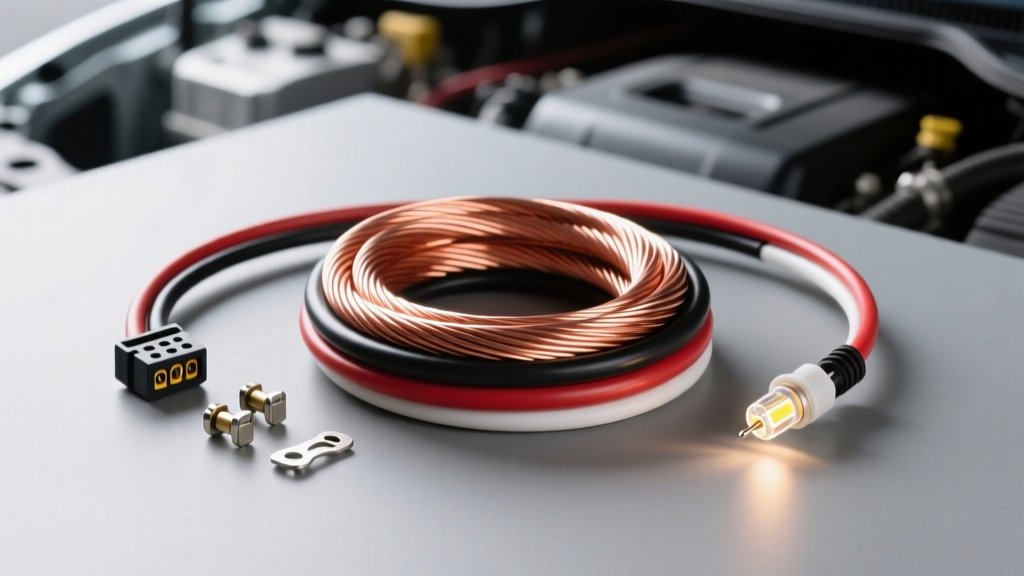
Automotive Application of 14 Gauge Wire for Light Fixture Systems
When designing or upgrading 12V DC electrical systems, selecting the correct 14 gauge wire for light fixture applications is a critical decision that bridges residential electrical concepts with stringent automotive standards. While household alternating current (AC) wiring relies on the National Electrical Code (NEC), automotive and marine direct current (DC) systems must adhere to Society of Automotive Engineers (SAE) standards. In a 12V DC environment, current (amperage) is significantly higher for the same wattage compared to 120V AC systems, making voltage drop and thermal management the primary concerns when routing power to auxiliary lighting, LED light bars, fog lamps, and interior dome fixtures.
This technical reference outlines the physical properties, ampacity ratings, voltage drop calculations, and termination standards required when deploying 14 AWG (American Wire Gauge) conductors in automotive lighting circuits. Whether you are wiring a 100W roof-mounted LED light bar or a high-draw interior accessory panel, understanding the exact specifications of 14 AWG wire ensures optimal lumen output, prevents insulation meltdown, and protects the vehicle from electrical fires.
Physical and Electrical Specifications (SAE J1128)
Automotive primary wire is governed by the SAE J1128 standard for low-tension primary cable. Unlike standard copper building wire, automotive 14 AWG wire is heavily stranded to withstand the continuous vibration, thermal cycling, and flexing inherent to vehicle operation. The standard dictates specific stranding configurations, outer diameters, and maximum DC resistance limits at 20°C (68°F).
| Parameter | Specification / Value |
|---|---|
| AWG Size | 14 |
| Circular Mil Area (CMA) | 4,110 cmil |
| Standard Stranding (GXL/TXL) | 19 strands of 30 AWG |
| Flexible Stranding (SGT/Battery) | 41 to 105 strands of 30-32 AWG |
| Conductor Diameter (Nominal) | 0.0641 inches (1.628 mm) |
| Max DC Resistance @ 20°C | 2.52 Ohms / 1,000 ft (8.27 Ohms / km) |
| Cross-Sectional Area | 2.00 mm² |
Ampacity Ratings and Overcurrent Protection
The ampacity (maximum continuous current a conductor can carry without exceeding its temperature rating) of 14 gauge wire for light fixture setups depends heavily on the insulation type and the ambient temperature under the hood or within the chassis harness. According to SAE derating curves, a single 14 AWG conductor in free air with cross-linked polyethylene (XLPE) insulation can safely handle up to 25 Amps.
However, automotive wiring is rarely in free air. When bundled with other wires in a loom or routed through tight firewall grommets, heat dissipation is restricted. For a bundled harness, the derated ampacity drops to approximately 15 to 18 Amps. Therefore, when protecting a 14 AWG lighting circuit, the industry standard is to utilize a 15A ATO/ATC blade fuse or a 15A MIDI/AME fuse located within 18 inches of the battery positive terminal. Never fuse a 14 AWG wire at 20A or higher in a bundled automotive harness, as the wire insulation will degrade and potentially short to the chassis before the fuse blows during a fault condition.
Voltage Drop Calculations for 12V Lighting
The most common reason for auxiliary light fixture failure or dimming in off-road and automotive applications is excessive voltage drop. LEDs and HID ballasts are highly sensitive to voltage fluctuations. A 12V LED light bar drawing 10 Amps requires a minimum of 11.5V at the fixture to operate at peak luminosity. Because 14 AWG wire has a resistance of 2.52 ohms per 1,000 feet, long runs from the engine bay relay to a rear bumper or roof rack will result in significant voltage loss.
The formula for calculating DC voltage drop in a two-wire circuit (positive and ground) is:
Voltage Drop = (2 x Length in feet x Resistance per foot x Current in Amps)
| Current Draw (Amps) | 5 ft Run (10 ft total) | 10 ft Run (20 ft total) | 20 ft Run (40 ft total) |
|---|---|---|---|
| 5A (e.g., Small LED Pods) | 0.25V (2.1%) | 0.50V (4.2%) | 1.01V (8.4%) |
| 10A (e.g., 100W Light Bar) | 0.50V (4.2%) | 1.01V (8.4%) | 2.02V (16.8%) - Unacceptable |
| 15A (e.g., High-Draw Halogens) | 0.76V (6.3%) | 1.51V (12.6%) | 3.02V (25.2%) - Severe Dimming |
Maximum Run Length Recommendations
Based on the data above, Pacer Group marine and automotive guidelines recommend keeping voltage drop below 3% for critical lighting circuits. For a 10 Amp LED light fixture, 14 gauge wire is perfectly adequate for runs up to 7 feet. If your light fixture is mounted on a truck roof rack or a trailer hitch (requiring a 15+ foot run from the battery), you must step up to 12 AWG or 10 AWG wire to maintain proper voltage at the fixture, even if 14 AWG can handle the thermal ampacity load.
Insulation Types: GXL vs. TXL vs. SXL
When sourcing 14 gauge wire for light fixture projects in vehicles, avoid standard PVC (polyvinyl chloride) primary wire found in big-box hardware stores. PVC insulation becomes brittle in extreme cold and melts easily near engine exhaust components. Instead, specify Cross-Linked Polyethylene (XLPE) insulation, which offers superior resistance to heat, chemicals, and abrasion.
- GXL (General Cross-Linked): Thin-wall insulation. The standard for modern OEM automotive harnesses. Rated for 125°C continuous operation. Ideal for routing through tight firewall grommets and door jambs.
- TXL (Thin Cross-Linked): Extra-thin wall. Lighter and more flexible than GXL. Used heavily in modern TE Connectivity automotive sensor and lighting harnesses where weight reduction is critical.
- SXL (Standard Cross-Linked): Thicker wall insulation. Offers the highest abrasion resistance. Recommended for under-hood lighting circuits, fog lights, and areas where the wire may rub against the chassis or suspension components.
Connector Selection and Crimping Standards
A 14 AWG wire is only as reliable as its termination. Soldering is strictly prohibited in modern automotive wiring due to the creation of a rigid stress point that will fatigue and snap under vehicle vibration. Open-barrel crimping using a ratcheting crimp tool is the mandatory standard.
For auxiliary light fixtures exposed to the elements, sealed connector systems are required to prevent capillary action from drawing moisture into the wire strands, which leads to green corrosion and high-resistance faults.
- Deutsch DT Series: The gold standard for off-road lighting. Use Size 16 contacts, which accommodate 14-20 AWG wire. The silicone rear seal and wedge lock mechanism ensure a watertight (IP68) connection at the light bar.
- Weather-Pack (Delphi/Aptiv): Excellent for under-hood fog light connections. Utilizes specific 16-14 AWG silicone ribbed seals and open-barrel terminals. Requires a dedicated Weather-Pack crimping die to fold the wire wings and insulation wings correctly.
- Metri-Pack 280: Commonly used for OEM headlight and taillight pigtails. The 280 series terminals are designed specifically to handle the 14 AWG to 10 AWG range for high-current lighting grounds and feeds.
Relay Integration and CAN-Bus Troubleshooting
When using 14 gauge wire for light fixture setups that draw over 5 Amps, the circuit must be triggered via a standard ISO mini relay (Bosch-style 4-pin or 5-pin). The 14 AWG wire should run from Pin 87 (Normally Open) of the relay directly to the positive terminal of the light fixture. The ground wire should also be 14 AWG, terminating at a dedicated chassis ground point using a ring terminal, star washer, and bare metal contact. Never rely on self-tapping screws for lighting grounds, as they easily vibrate loose and cause PWM (Pulse Width Modulation) flickering in LED fixtures.
CAN-Bus Conflict Warning: If you are tapping into an existing factory lighting circuit (such as a headlight or turn signal DRL wire) to trigger your 14 AWG auxiliary lighting relay, modern vehicles with CAN-Bus or LIN-Bus networks will detect the change in circuit resistance. This often triggers a 'Bulb Out' warning on the dash or causes hyper-flashing. Always use an isolated opto-coupler relay trigger or a dedicated CAN-Bus decoder module when integrating aftermarket light fixtures into late-model (2015+) vehicle lighting networks to prevent ECU fault codes.