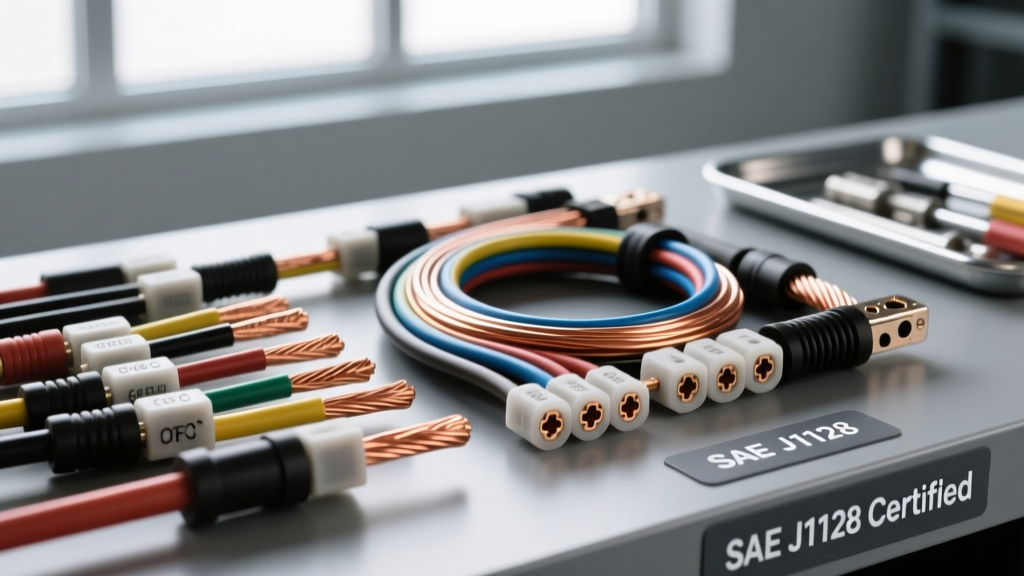
Introduction to 6 AWG in High-Current Automotive Systems
When upgrading high-draw electrical components in a vehicle, selecting the correct conductor is critical to prevent voltage drop, overheating, and catastrophic electrical fires. 6-gauge wires (6 AWG) represent a vital middle ground in automotive wiring, bridging the gap between standard accessory wiring and heavy-duty battery cables. With a bare conductor diameter of approximately 4.115mm and a cross-sectional area of 26,240 circular mils, 6 AWG wire is the industry standard for 60A to 120A continuous and peak loads in 12V and 14.4V systems.
However, not all 6 AWG wire is created equal. The market is flooded with varying material compositions, insulation grades, and stranding configurations. This comprehensive selection guide breaks down the technical specifications, material debates, and termination requirements for 6-gauge automotive wire, ensuring your high-current routing meets or exceeds SAE J1128 standards for surface vehicle electrical cable.
The Core Material Debate: OFC vs. CCA 6-Gauge Wires
The most critical decision when purchasing 6 AWG wire is choosing between Oxygen-Free Copper (OFC) and Copper-Clad Aluminum (CCA). The price disparity is significant, but the electrical and mechanical properties dictate where each can be safely deployed.
Oxygen-Free Copper (OFC)
OFC is the gold standard for automotive electrical systems. By minimizing oxygen inclusions during the smelting process, OFC achieves near 100% conductivity and exceptional resistance to galvanic corrosion. In a 12V automotive environment where alternators output up to 14.4V, maintaining voltage at the load is paramount. A 20-foot run of 6 AWG OFC carrying 60 amps will experience a voltage drop of less than 0.95V, keeping sensitive ECU relays and high-power audio amplifiers well within their operational thresholds.
Copper-Clad Aluminum (CCA)
CCA wire features an aluminum core with a thin outer layer of copper. While it is significantly lighter and cheaper than OFC, aluminum has only 61% of the conductivity of copper by volume. Consequently, a 6 AWG CCA wire exhibits the electrical resistance of roughly an 8 AWG OFC wire. CCA is also highly susceptible to work hardening, meaning the vibrations inherent in automotive chassis and engine bays can cause the aluminum core to fracture inside the insulation over time. Furthermore, if the copper cladding is nicked during stripping, the exposed aluminum will rapidly oxidize and create a high-resistance hot spot.
Technical Specifications & Ampacity Comparison Chart
The following chart compares the fundamental electrical properties of OFC and CCA 6-gauge wires. Ampacity ratings are based on single conductors routed in an engine bay with an ambient temperature of 50°C (122°F), referencing standard automotive ampacity derating tables.
| Property | 6 AWG OFC (Pure Copper) | 6 AWG CCA (Aluminum Core) |
|---|---|---|
| Conductor Diameter | 4.115 mm | 4.115 mm |
| Cross-Sectional Area | 13.30 mm² (26,240 CM) | 13.30 mm² (26,240 CM) |
| Resistance @ 20°C | 0.3951 Ω / 1000 ft | 0.6410 Ω / 1000 ft |
| Max Ampacity (Engine Bay) | 105A - 120A | 65A - 75A |
| Max Ampacity (Cabin/Chassis) | 150A (Peak) | 90A (Peak) |
| Weight per 100 ft | ~2.6 lbs | ~1.4 lbs |
Insulation Selection: XLPE, PVC, and PTFE
The copper or aluminum core is only half the equation. The dielectric insulation must withstand under-hood heat, chemical exposure (oil, brake fluid, battery acid), and physical abrasion.
- Cross-Linked Polyethylene (XLPE): The premier choice for under-hood 6 AWG routing. XLPE insulation is rated for continuous use at 125°C (257°F) and peak temps of 150°C. It is highly resistant to automotive fluids and will not melt when a soldering iron accidentally touches it during termination.
- Polyvinyl Chloride (PVC): Standard primary wire uses PVC, rated for 105°C. It is flexible and cost-effective but should be restricted to the vehicle cabin, trunk, or protected frame rails where ambient temperatures remain lower. PVC becomes brittle over time when exposed to high UV and engine heat.
- PTFE (Teflon) / Silicone: Reserved for extreme environments, such as EV battery interconnects or turbo-proximate sensor wiring. Silicone offers 200°C resistance and immense flexibility but lacks the abrasion resistance of XLPE, requiring an additional braided sleeve or split loom.
Termination: Connectors, Crimping, and Torque Specs
Improper termination is the leading cause of electrical fires in high-amperage circuits. 6 AWG wire requires specialized hardware to ensure a gas-tight connection that prevents oxygen ingress and subsequent corrosion.
Connector Types
For permanent connections to starter motors, alternators (e.g., Denso 150A B+ posts), and distribution blocks, use tinned copper ring terminals with adhesive-lined (dual-wall) heat shrink. The adhesive melts during the shrinking process, sealing the crimp barrel against moisture. For modular setups, such as removable winch power feeds or trailer connections, the Anderson SB50 (Single-Pole Powerpole) is the industry standard. The SB50 handles up to 50A continuous and 160A peak, utilizing a stainless steel leaf spring to maintain constant contact pressure.
Crimping Methodology
Never use indent crimpers or pliers on 6 AWG battery lugs. You must use a hex-crimp die paired with a 6-ton hydraulic or ratcheting mechanical crimper. A hex crimp uniformly compresses the terminal barrel around the 26,240 circular mils of wire, cold-welding the metals together without cutting into the outer strands. After crimping, apply heat shrink starting from the middle of the barrel and working outward to push air bubbles and excess adhesive out the ends.
Torque Specifications
When securing a 6 AWG ring terminal to an M8 alternator stud or battery busbar, torque the nut to 10-12 Nm (88-106 in-lbs). Under-torquing causes micro-arcing and heat buildup; over-torquing will strip the brass or aluminum threads on the component housing.
Real-World Automotive Applications & Routing Rules
Understanding where to deploy 6-gauge wires ensures optimal system efficiency. Common applications include:
- High-Output Alternator Upgrades: When upgrading from a stock 90A alternator to a 150A+ unit, the factory 8 AWG or 10 AWG charge wire will bottleneck output and overheat. Upgrading to a 6 AWG XLPE charge wire routed away from exhaust headers ensures the battery receives full alternator output.
- Car Audio Amplifiers: A 600W RMS Class D amplifier draws roughly 50A at 12V. 6 AWG OFC wire is the exact requirement for runs up to 15 feet from the battery to the cabin. Always fuse this wire within 18 inches of the positive battery terminal using an ANL or Class-T fuse.
- ATV/UTV Winch Systems: While heavy truck winches require 2/0 AWG, smaller 3,000 lb to 4,500 lb winches on Polaris or Can-Am rigs operate safely on 6 AWG winch cables, provided the duty cycle is monitored to prevent thermal saturation.
Routing Rule: Never route 6 AWG high-current power wires parallel to low-voltage CAN bus lines, RCA audio cables, or O2 sensor harnesses. Maintain a minimum separation of 6 inches to prevent Electromagnetic Interference (EMI), which can trigger phantom ECU codes or induce alternator whine in audio systems.
Common Failure Modes and Troubleshooting Matrix
Even premium marine and automotive grade wire can fail if installed incorrectly. Use this diagnostic matrix to identify 6 AWG circuit failures.
| Symptom | Probable Cause | Diagnostic Fix |
|---|---|---|
| Insulation melting near terminal | Indent crimp used; loose connection creating high resistance. | Cut back wire, strip fresh, and perform a proper hex crimp with a ratcheting tool. |
| Green/White powder at crimp | Galvanic corrosion from moisture ingress (lack of adhesive heat shrink). | Clean with electrical contact cleaner, re-crimp, and seal with dual-wall heat shrink. |
| Severe voltage drop under load | Use of CCA wire instead of OFC, or wire run exceeds 20 feet. | Verify wire material. If CCA, replace with OFC or step up to 4 AWG to compensate for resistance. |
| Intermittent power loss off-road | Strand fracture due to work-hardening of CCA or rigid solid-core wire. | Replace with highly stranded (Type III) OFC wire and add a service loop for vibration absorption. |
By prioritizing Oxygen-Free Copper, selecting the correct high-temperature insulation, and adhering to strict hex-crimp termination protocols, your 6 AWG automotive wiring will deliver reliable, high-amperage performance for the life of the vehicle.