The Core Question: What Gauge Wire for Invisible Fence?
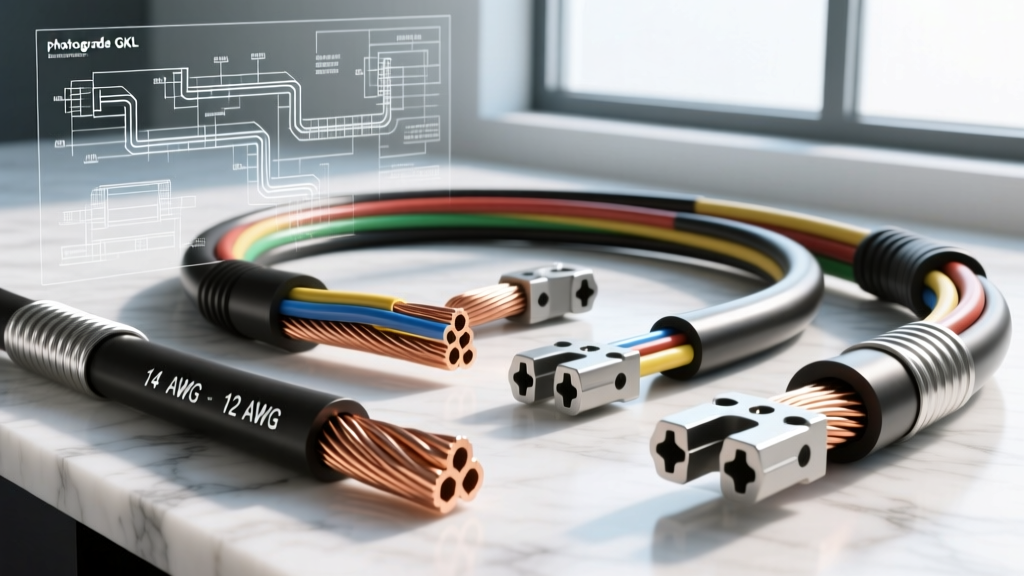
When planning a subterranean pet containment, RV park perimeter, or agricultural boundary system, the most critical decision is determining what gauge wire for invisible fence applications provides the best balance of signal integrity and longevity. Standard retail kits typically include 20 AWG Copper-Clad Steel (CCS) wire with thin PVC insulation. While adequate for small, temporary setups, this wire is notorious for rapid degradation in wet or acidic soils. For permanent, high-reliability installations, professional integrators and automotive electrical engineers strongly recommend upgrading to 14 AWG or 16 AWG solid copper or automotive-grade stranded wire.
The invisible fence transmitter does not send a simple DC current; it broadcasts a 10 kHz to 15 kHz Radio Frequency (RF) signal through the boundary loop. The wire effectively acts as a continuous loop antenna. According to PetSafe installation guidelines, the physical resistance of the wire directly impacts the strength and consistency of the electromagnetic field. A higher gauge (thinner wire) increases resistance, forcing the transmitter to work harder, which leads to voltage drop, a narrower containment field, and premature failure of the transmitter's internal RF oscillator.
Boundary Loop Gauge Reference Chart
| AWG Size | Conductor Material | Resistance (per 1,000 ft) | Max Recommended Loop Length | Application Profile |
|---|---|---|---|---|
| 20 AWG | Copper-Clad Steel (CCS) | 10.15 Ω | 500 ft | Standard retail kits; temporary setups. |
| 18 AWG | Solid Copper | 6.38 Ω | 1,000 ft | Standard residential lawns. |
| 16 AWG | Stranded Copper (THHN) | 4.01 Ω | 1,500 ft | Large estates; light agricultural. |
| 14 AWG | Automotive GXL / TXL | 2.52 Ω | 2,500+ ft | RV parks, farms, extreme environments. |
Why Automotive GXL and TXL Wire Destroys Standard PVC
The secret to a lifetime underground loop lies in the insulation. Standard fence wire uses Polyvinyl Chloride (PVC), which becomes brittle in freezing temperatures and degrades when exposed to soil acids, fertilizers, and moisture. By utilizing automotive primary wire built to the SAE J1128 Low Tension Primary Cable standard, you gain access to Cross-Linked Polyethylene (XLPE) insulation, commonly known as GXL or TXL.
XLPE is chemically cross-linked, creating a thermoset material that is practically impervious to moisture, abrasion, and chemical corrosion. GXL (General Cross-Linked) features a slightly thicker wall than TXL, making it the ultimate choice for direct-burial applications where the wire might encounter sharp rocks or shifting soil. While standard 20 AWG CCS wire will typically fail within 2 to 4 years due to micro-fractures and insulation rot, a 14 AWG GXL automotive wire loop can easily outlast the fence transmitter itself.
Wiring the 12V DC Transmitter for RV and Off-Grid Setups
Many off-grid cabins, RV owners, and farmers need to power their invisible fence transmitters from a 12V DC battery bank rather than a standard 120V AC wall outlet. If you are using a native 12V DC transmitter or powering a pure sine wave inverter, you must apply proper automotive circuit protection to prevent parasitic battery drain and fire hazards.
We recommend using a standard Bosch-style 4-pin ISO mini relay to control the transmitter's power. This allows you to switch the high-current fence load using a low-current dash switch or ignition source, adhering to standard SAE J1128 color codes.
12V DC Relay Pinout and Wiring Specifications
| Relay Pin | Function | Wire Color (SAE) | Wire Gauge | Connection Details |
|---|---|---|---|---|
| Pin 30 | 12V+ Constant | Red | 14 AWG GXL | Direct to battery positive via 10A ATC inline fuse. |
| Pin 87 | 12V+ Load | Red | 14 AWG GXL | To transmitter 12V+ input or inverter DC input. |
| Pin 86 | Switched Trigger | Blue | 18 AWG GXL | To 12V+ switched source (e.g., RV ignition or dash toggle). |
| Pin 85 | Ground | Black | 14 AWG GXL | To chassis ground bus or battery negative. |
For a deeper understanding of relay integration, consult the Haynes Automotive Relays Explained guide. Always use a ratcheting crimping tool for your Delphi Weather-Pack or standard heat-shrink butt connectors to ensure a gas-tight crimp that will not vibrate loose in a mobile or agricultural environment.
Professional Splicing and Waterproofing Protocols
The number one cause of invisible fence failure is poor splicing. Standard wire nuts and electrical tape will fail underground within weeks. When joining two ends of your 14 AWG GXL boundary loop, follow this automotive-marine hybrid protocol:
- Strip and Clean: Strip 3/4 inch of insulation. Clean the bare copper with isopropyl alcohol to remove any drawing lubricants.
- Crimp: Use a marine-grade, adhesive-lined dual-wall heat shrink butt connector. Crimp firmly with a ratcheting tool.
- Seal: Apply heat evenly until the tubing shrinks and the inner polyamide adhesive melts and oozes from both ends, creating a 100% waterproof seal.
- Terminal Prep: When connecting the loop wires to the transmitter's terminal block, tin the stranded automotive wire with rosin-core solder. This prevents individual strands from fraying and ensures a solid connection when torqued to the manufacturer's specification (typically 0.5 Nm).
Troubleshooting Signal Loss and Wire Breaks
Even with automotive-grade wire, physical breaks can occur from aggressive landscaping or burrowing animals. Use this symptom-cause-fix decision tree to diagnose loop failures:
- Symptom: Transmitter alarms continuously with a solid red LED.
- Cause: Open circuit (break) in the boundary loop.
- Fix: Disconnect the loop wires from the transmitter. Set your digital multimeter to Ohms (Ω). Measure across the two wire ends. A healthy 1,000 ft loop of 14 AWG wire should read approximately 2.5 Ω. If the meter reads 'OL' (Over Limit), a break exists. Use the 'divide and conquer' method: locate the physical midpoint of the loop, cut the wire, and test each half to isolate the broken section.
- Symptom: Boundary field is weak or inconsistent; collar only triggers sporadically.
- Cause: High resistance joint or undersized wire gauge causing excessive voltage drop.
- Fix: Inspect all splices for corrosion. If using 20 AWG CCS wire on a loop larger than 500 ft, the RF signal is degrading over distance. You must upgrade to a thicker 14 AWG or 16 AWG copper loop to reduce impedance and restore the electromagnetic field width.
By treating your invisible fence installation with the same rigor as a critical automotive electrical system, you eliminate the recurring headaches of broken wires and weak signals, ensuring a secure, permanent perimeter for years to come.