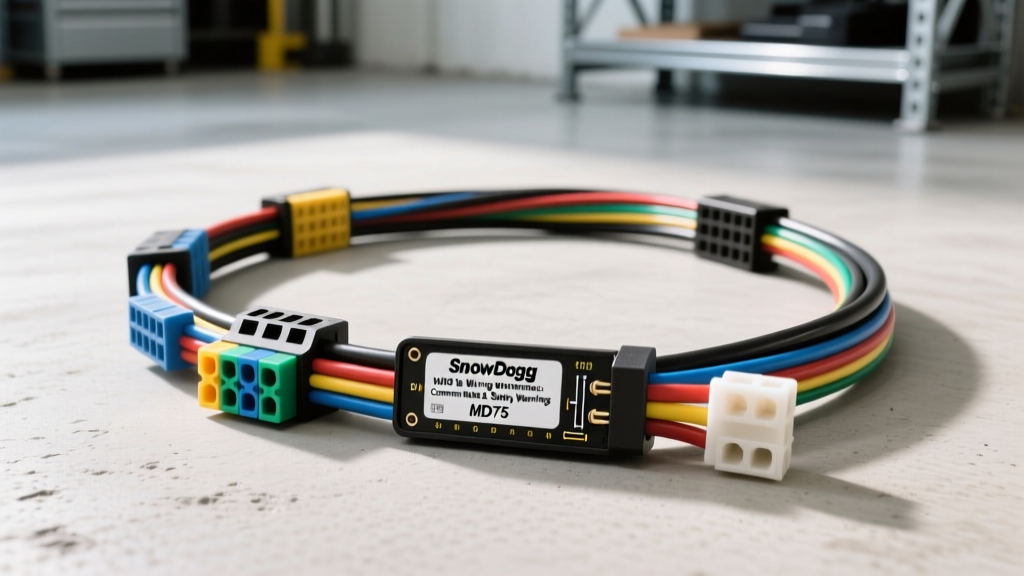
Introduction to the SnowDogg MD75 Electrical System
The SnowDogg MD75 is a rugged, mid-duty steel snow plow designed for commercial and heavy residential use. While its hydraulic and mechanical components are built to withstand extreme abuse, the electrical system—specifically the SnowDogg MD75 wiring harness—remains the most vulnerable point of failure. The plow's hydraulic pump motor can draw between 150 and 250 amps under heavy load or stall conditions. This massive current draw requires flawless power delivery, robust grounding, and precise multiplex signal routing. When installers or fleet mechanics cut corners during harness installation or maintenance, the result is premature solenoid failure, melted connectors, or complete plow inoperability during a storm.
Critical Safety Warnings Before You Begin
Working on high-amperage DC snow plow circuits carries significant risks. Before touching any part of the SnowDogg MD75 wiring harness, adhere to these non-negotiable safety protocols:
- Disconnect the Primary Power Source: Always disconnect the negative battery terminal on the host vehicle before routing, crimping, or modifying the 2 AWG main power cables. A dropped wrench across an active 2 AWG positive cable and the chassis can instantly weld the tool to the frame, cause severe burns, and ignite a vehicle fire.
- Use Insulated Tools: When testing live circuits at the solenoid or motor, use only VDE-rated insulated wrenches and screwdrivers to prevent accidental shorting across the motor terminals.
- Support the Plow Assembly: Never work on the plow-side harness or pivot pin grounds without the plow resting securely on the ground or supported by mechanical safety stands. Hydraulic pressure bleed-down can cause the moldboard to drop unexpectedly, crushing hands or fingers against the harness routing points.
Top 5 SnowDogg MD75 Wiring Harness Mistakes
1. Undersizing the Main Power and Ground Cables
The most frequent and destructive mistake is using undersized wire for the main battery feeds. According to SAE J1128 standards for low-tension primary cable, voltage drop increases exponentially with cable length and current draw. The SnowDogg MD75 requires a minimum of 2 AWG SXL (cross-linked polyethylene) wire for both the positive feed from the battery to the solenoid, and the negative ground from the motor back to the battery. Using 4 AWG or 6 AWG wire to save money or ease routing will cause severe voltage drop at the motor. This forces the motor to draw higher amperage to compensate, leading to overheated windings, tripped in-cab circuit breakers, and melted harness insulation.
2. Poor Chassis Grounding (The Pivot Pin Killer)
The plow motor must be grounded directly to the vehicle's battery negative terminal or engine block using a dedicated 2 AWG cable. A common, catastrophic error is grounding the plow motor to the truck's frame or the plow's A-frame. Because the MD75 pivots on steel pins and bushings, a poor electrical ground will force the 200-amp return current to seek the path of least resistance through the pivot pins. This causes micro-arcing inside the pivot bushings, rapidly destroying the mechanical pivot points and seizing the plow. Always run a dedicated, continuous 2 AWG ground wire from the motor casing directly to the vehicle battery.
3. Mishandling the 13-Pin Multiplex Connector
The SnowDogg MD75 utilizes a 13-pin multiplex connector to handle lighting and control signals. Mechanics often force the connector together at an angle, bending the delicate brass pins. Furthermore, failing to apply a dielectric compound (such as Nyogel 760G) allows road salt and moisture to infiltrate the housing. This causes galvanic corrosion, leading to high resistance in the control circuits. When the resistance in the 14-16 AWG control wires exceeds the threshold, the in-cab controller will throw a fault code, disabling the lift and angle functions.
4. Installing the Wrong Solenoid Type
The MD75 harness relies on a heavy-duty solenoid to engage the pump motor. A frequent replacement error is installing a standard automotive starter solenoid. Starter solenoids are designed for intermittent duty (cranking for 5-10 seconds). Snow plow operations require continuous duty cycling. If a starter solenoid is used, the internal coil will overheat and melt within minutes of continuous plowing. Always verify the replacement is a continuous-duty solenoid, such as the Trombetta 974-1211-011 or the OEM-equivalent White-Rodgers specified in the Buyers Products SnowDogg Technical Resources documentation.
5. Routing Harnesses Near Exhaust or Moving Steering Components
The vehicle-side harness must be routed with extreme care. Zip-tying the harness too close to the exhaust manifold will melt the PVC or SXL insulation, causing a dead short against the chassis. Similarly, routing the harness near the steering shaft or suspension tie rods without adequate slack will result in the harness being severed when the wheels are turned to full lock. Always use split-loom tubing, secure the harness with adhesive-backed cable mounts (not abrasive zip-ties directly on the wire), and maintain a minimum 6-inch clearance from all exhaust components.
SnowDogg MD75 13-Pin Connector Pinout & Wire Color Reference
Understanding the pinout is critical for diagnosing lighting and control faults. Below is the standard reference for the SnowDogg 13-pin multiplex vehicle-to-plow connector. Always verify against your specific model year's schematic, as SAE J1292 color codes can vary slightly by OEM supplier batches.
| Pin Number | Function | Standard Wire Color | AWG Size |
|---|---|---|---|
| 1 | Left Turn / Hazard | Yellow | 16 AWG |
| 2 | Right Turn / Hazard | Green | 16 AWG |
| 3 | Tail / Marker Lights | Brown | 16 AWG |
| 4 | System Ground (Lights) | Black | 12 AWG |
| 5 | Left Headlight (High/Low) | Blue / White | 14 AWG |
| 6 | Right Headlight (High/Low) | Blue / Red | 14 AWG |
| 7 | Plow Raise / Lower Control | Red / Black Trace | 14 AWG |
| 8 | 12V Accessory / Controller Power | Red | 12 AWG |
| 9 | Left Angle Control Signal | Orange | 16 AWG |
| 10 | Right Angle Control Signal | Purple | 16 AWG |
| 11 | Controller Data / Multiplex Comm | White | 18 AWG |
| 12 | Spare / Aux Function | Gray | 16 AWG |
| 13 | Controller Ground | Black w/ White Trace | 14 AWG |
Diagnostic Decision Tree: Plow Fails to Respond
When the SnowDogg MD75 fails to operate, use this structured diagnostic approach to isolate the wiring harness fault without replacing unnecessary components.
Symptom: Motor clicks loudly but the pump does not run.
- Cause A: High resistance across the solenoid main terminals. Fix: Use a digital multimeter to measure voltage drop across the solenoid while the button is pressed. A drop greater than 0.2V indicates internal solenoid pitting. Replace the solenoid.
- Cause B: Voltage drop on the 2 AWG ground cable. Fix: Perform a voltage drop test from the motor casing to the battery negative terminal. Clean all ring terminal contact surfaces with a wire brush and apply anti-oxidant compound.
Symptom: In-cab controller powers on, but displays a 'Plow Not Connected' or Multiplex Fault code.
- Cause A: Broken Pin 11 (Data) or Pin 8 (12V Power) in the 13-pin connector. Fix: Disconnect the 13-pin plug. Inspect the female sockets for spread terminals using a pin gauge. Check for corrosion. Apply dielectric grease and reconnect.
- Cause B: Blown inline fuse on the vehicle-side control harness. Fix: Locate the 15A or 20A ATO fuse on the red 12V accessory wire near the vehicle battery. Test for continuity and replace if blown. Investigate the harness for chafing against the firewall.
Symptom: Plow lights flicker or fail to illuminate when truck lights are on.
- Cause A: Poor ground on Pin 4. Fix: Verify the 12 AWG black ground wire has a clean, bare-metal connection to the truck's chassis or battery negative. Check the plow-side headlamp ground rings mounted to the moldboard.
- Cause B: Headlamp isolation relay failure. Fix: Test the OEM headlamp isolation harness. If the truck's headlights do not turn off when the plow lights turn on, the isolation relay module is likely faulty or the trigger wire (usually white or light green) is severed.
Preventative Maintenance for Harness Longevity
To maximize the lifespan of your SnowDogg MD75 wiring harness, implement a strict end-of-season maintenance routine. Disconnect the 13-pin connector and inspect every pin for green copper oxide corrosion. Clean pins with electrical contact cleaner and a nylon brush, then pack the connector cavity with a high-quality dielectric grease. Inspect the 2 AWG battery cables for micro-cracks in the insulation, particularly near the ring terminals where flexing occurs. Finally, verify that all harness zip-ties and loom clamps are secure, ensuring the wiring remains isolated from the harsh, high-vibration environment of the snow plow mounting assembly.