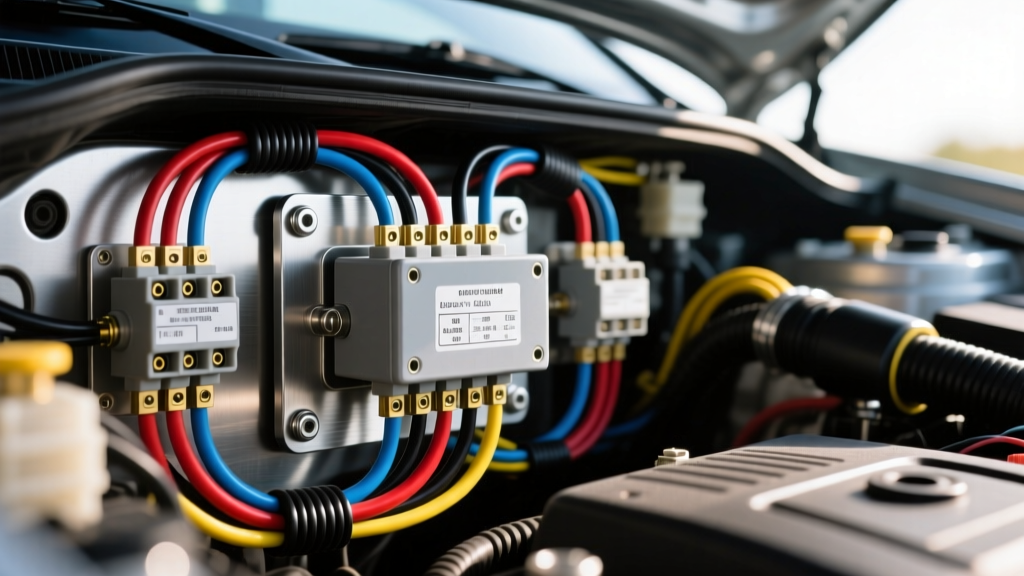
The Economics of a Custom Relay Box Car Setup
When integrating high-draw auxiliary lighting, winch controls, or off-road light bars, relying on factory wiring or cheap inline inline-fuse taps is a recipe for thermal failure. Building a custom relay box car configuration centralizes your power distribution, protects sensitive vehicle ECU circuits from voltage spikes, and ensures optimal voltage delivery to your accessories. However, transitioning from a pre-made $30 plug-and-play harness to a bespoke, expedition-grade power distribution node requires a clear understanding of tooling costs, material quality, and long-term reliability investments. This analysis breaks down the exact financial and technical requirements to engineer a professional-grade auxiliary relay box car system from scratch.
Mandatory Tooling: Investment vs. Expense
The most common failure point in automotive electrical systems is a poorly executed crimp. A loose terminal leads to increased resistance, which generates heat and ultimately melts the relay socket or fuse block. To build a reliable system, you must invest in proper crimping and diagnostic tools.
Essential Tool Cost Breakdown
- Open Barrel Crimper (IWISS SN-28B or Titan TIT45531): $45 - $65. Standard ISO mini relays and most automotive fuse blocks use open-barrel (non-insulated) terminals. Ratcheting open-barrel crimpers ensure the terminal wings wrap perfectly around the wire strands and the insulation grip secures the jacket.
- Closed Barrel / Heat Shrink Crimper (Knoweasy or Titan): $35 - $50. Required for marine-grade adhesive-lined ring terminals used on heavy-gauge busbar connections (e.g., 8 AWG to 4 AWG).
- Precision Wire Strippers (Knipex 12 62 180 or automatic strippers): $40 - $70. Scoring the copper strands while stripping PVC or TXL insulation compromises the wire's ampacity. Precision strippers prevent nicking.
- Digital Multimeter (Fluke 115 or 87V): $180 - $450. Essential for measuring voltage drop across the relay box feeds and verifying coil trigger signals from the vehicle's BCM (Body Control Module).
- Heat Gun with Reflector Nozzle: $45. Required for shrinking adhesive-lined terminals and sealing weather-pack connectors against moisture ingress.
Total Baseline Tool Investment: $345 - $680. While this upfront cost exceeds the price of a pre-wired harness, these tools pay for themselves by preventing $1,000+ electrical fire damages or stranded-vehicle recovery fees.
Component Cost Analysis: Budget vs. Expedition-Grade
Not all relays and fuse blocks are created equal. Budget components often use inferior copper alloys that oxidize rapidly, leading to high-resistance connections. Below is a cost and reliability comparison for a standard 4-relay auxiliary lighting setup.
| Component Category | Budget / Auto Parts Store Grade | Expedition / Marine-Grade | Cost Difference (4-Relay Setup) |
|---|---|---|---|
| Relays | Generic unbranded ($2.50 ea) | Bosch / Hella / Tyco ($8.00 ea) | +$22.00 |
| Fuse Block | Molded plastic inline taps ($3.00 ea) | Blue Sea Systems ST Blade Busbar ($45.00) | +$33.00 |
| Wire Insulation | Standard PVC ($0.40/ft) | SAE J1128 GXL / TXL Cross-linked ($0.85/ft) | +$27.00 (60ft) |
| Connectors | Standard vinyl push-on ($0.10 ea) | Deutsch DT / Weather-Pack Sealed ($1.50 ea) | +$33.60 |
| Total Estimated Cost | ~$35.00 | ~$150.60 | +$115.60 |
Wire Gauge, Insulation, and Voltage Drop Specifications
According to SAE J1128 standards, automotive wire must withstand severe under-hood temperatures. Standard PVC wire begins to soften and degrade at 105°C. For a professional relay box car build, you must use GXL or TXL cross-linked polyethylene wire, which withstands up to 125°C and features a thinner insulation wall, allowing for tighter routing in crowded engine bays.
Amperage and Wire Sizing Chart (12V System)
| Wire Gauge (AWG) | Max Continuous Amperage | Primary Use Case in Relay Box | Recommended Fuse Size |
|---|---|---|---|
| 8 AWG (Red) | 50A | Main power feed from battery to busbar | 60A MIDI / ANL |
| 10 AWG (Red/Blue) | 30A | Relay Pin 30 feeds & Pin 87 accessory outputs | 30A ATC Blade |
| 14 AWG (Yellow) | 15A | Relay coil triggers (Pins 85 & 86) | 10A ATC Blade |
| 18 AWG (White) | 5A | LED indicator lights inside the cabin | 3A Mini Blade |
Technical Integration: Standard ISO 5-Pin Relay Pinout
The backbone of any auxiliary relay box car project is the standard Bosch-style ISO mini 5-pin relay. Understanding the internal architecture is critical for wiring the trigger circuits and load circuits correctly without back-feeding sensitive vehicle computers.
- Pin 30 (Common Input): Connects to the fused 12V+ busbar. Use 10 AWG wire. This is the high-current source waiting to be routed to your lights.
- Pin 87 (Normally Open Output): Connects to the accessory (e.g., light bar). Use 10 AWG wire. When the coil is energized, the internal contactor bridges Pin 30 to Pin 87.
- Pin 87a (Normally Closed Output): Unused in standard auxiliary lighting. Leave empty or insulate to prevent accidental shorts.
- Pin 86 (Coil Positive Trigger): Connects to your dashboard switch or BCM trigger signal. Use 14 AWG wire. If triggered by a modern vehicle's low-current PWM (Pulse Width Modulation) signal, you may need a digital trigger interface module to prevent relay chatter.
- Pin 85 (Coil Ground): Connects to a clean, bare-metal chassis ground or the negative busbar. Use 14 AWG wire.
Expert Tip on Coil Suppression: When the relay coil (an inductor) is de-energized, it generates a high-voltage flyback spike that can destroy solid-state switches or vehicle ECUs. As detailed in Littelfuse application guidelines, you should install a 1N4001 flyback diode across Pins 85 and 86 (with the diode stripe facing Pin 86) to safely dissipate this transient voltage spike.
Hidden Costs: Real-World Failure Modes and Diagnostics
When analyzing the cost of a relay box car installation, you must also factor in the 'cost of failure.' Cheap components introduce specific, predictable failure modes that require expensive diagnostic time to resolve.
1. Thermal Runaway in Standard Fuse Taps
Budget builds often use 'Add-a-Circuit' fuse taps in the vehicle's interior fuse panel to power the relay box's main feed. These taps rely on friction fit and share the load with the original circuit. If your light bar draws 25A and the original circuit draws 5A, the shared fuse slot will experience severe thermal runaway, melting the plastic fuse block. Solution: Run an 8 AWG main feed directly from the battery's positive terminal, protected by a 60A ANL fuse within 18 inches of the battery post.
2. Galvanic Corrosion in Unsealed Terminals
Using standard vinyl-insulated push-on terminals on the relay blades allows moisture and road salt to wick into the copper strands. This creates copper oxide, which acts as a resistor. A 0.5-ohm resistance on a 20A circuit will generate 200 watts of pure heat at the terminal, melting the relay socket. Solution: Invest the extra $35 in Deutsch DT connectors or sealed Weather-Pack pigtails for the relay box interface.
3. Voltage Drop on Long Trigger Runs
If your relay box is mounted in the rear cargo area of a truck, running 18 AWG wire for the trigger signal from the dashboard will result in significant voltage drop. The relay coil may not receive the minimum 9V required to pull the contactor closed, resulting in a 'half-engaged' relay that arcs and welds its internal contacts together. Solution: Step up trigger wiring to 14 AWG for any run exceeding 10 feet.
Summary and Sourcing
Building a bespoke relay box car setup is an exercise in preventive engineering. By allocating approximately $150 to $200 for high-quality GXL wire, Bosch relays, Blue Sea busbars, and sealed connectors, you eliminate the single points of failure inherent in budget harnesses. Always verify your crimp quality with a pull-test, and use a multimeter to ensure your voltage drop across the entire relay box assembly remains under 0.2V under full load. For further reading on marine and off-road power distribution standards, consult the Blue Sea Systems Circuit Protection Guide to ensure your busbar and fuse sizing perfectly matches your auxiliary lighting demands.