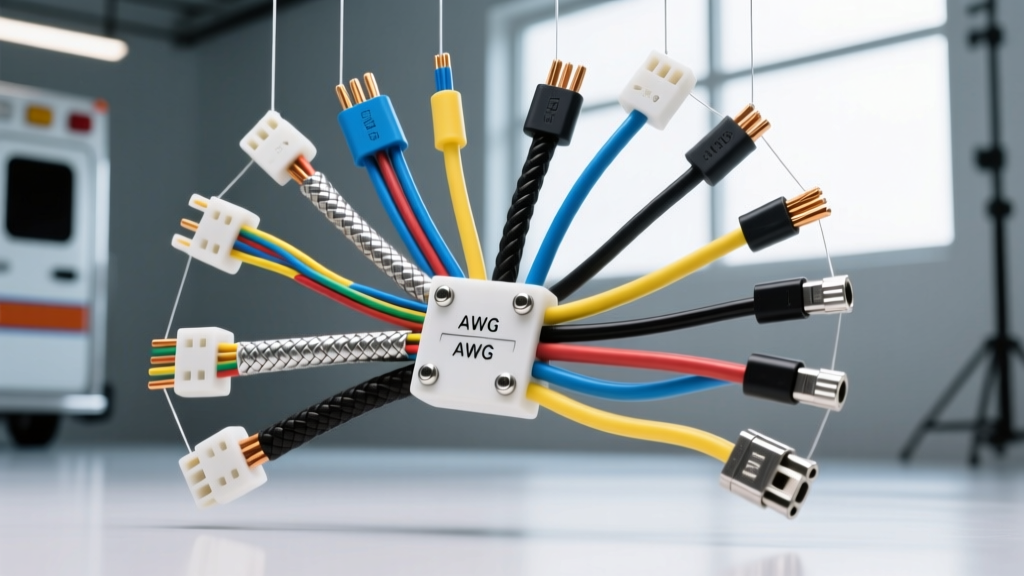
The Intersection of Automotive and Medical Electrical Standards
When upfitting Type I, II, or III ambulances and mobile medical clinics, integrators face a unique engineering challenge: bridging the harsh, high-vibration, high-EMI environment of a commercial vehicle chassis with the ultra-sensitive, life-critical requirements of medical equipment. Selecting the right custom wiring harness for medical devices is not merely a matter of routing 12V or 24V DC power. It requires a meticulous product comparison between standard automotive looms and specialized medical-grade assemblies. Mobile ventilators, transport defibrillators, and portable ultrasound machines demand absolute signal integrity and uninterrupted power. A failure in the harness can result in device reset, data corruption, or catastrophic patient harm. This guide provides a comprehensive product comparison and selection framework for automotive electrical engineers and upfitters tasked with integrating medical devices into mobile platforms like the Ford F-450 Super Duty cutaway or the Chevrolet Express 4500.
Product Comparison: Off-the-Shelf Ambulance Harnesses vs. Custom Medical Harnesses
The first critical decision in the selection process is whether to utilize pre-fabricated, off-the-shelf ambulance power harnesses or to commission a fully custom medical device harness. While OEM ambulance harnesses are designed to handle heavy 12V DC loads for lighting and HVAC, they often lack the specific shielding, chemical resistance, and connector interfaces required by modern medical electronics.
| Feature | Standard OEM Ambulance Harness | Custom Wiring Harness for Medical Devices |
|---|---|---|
| Primary Application | Lighting, HVAC, Sirens, General 12V outlets | Life-support systems, diagnostic imaging, telemetry |
| EMI/RFI Shielding | Unshielded or basic foil wrap | Dual-layer braided copper (95%+ coverage) with 360-degree backshells |
| Wire Insulation | PVC or standard XLPE (SAE J1128) | Medical-grade TPU or Silicone (fluid/chemical resistant) |
| Connectors | Deutsch DT, Metri-Pack, Weather-Pack | Hermetic Lemo, Souriau UTG, or sealed MIL-SPEC |
| Cost & Lead Time | Low cost, immediate availability | Higher cost, 4-8 week engineering and fabrication lead time |
For non-critical peripherals, an OEM harness is sufficient. However, for any device classified under IEC 60601-1 (Medical Electrical Equipment), a custom harness is mandatory to mitigate Electromagnetic Interference (EMI) generated by the ambulance's high-frequency UHF/VHF radios and the high-frequency switching noise from onboard DC-to-AC inverters.
Technical Specifications: Mobile Ventilator and Defibrillator Power Distribution
When designing a custom wiring harness for medical devices, wire gauge (AWG) selection must account for both continuous current draw and transient voltage drops. According to SAE J1128 standards, voltage drop should not exceed 3% for critical life-support circuits. In a Type I ambulance, the distance from the secondary battery bank to the patient compartment can exceed 18 feet, necessitating a larger wire gauge than the device's internal fuse might suggest.
Wire Selection and Color Code Matrix
Below is a specification chart for a custom harness powering a mobile transport ventilator and a multi-parameter patient monitor, utilizing a dedicated 12V DC isolated battery bank.
| Function | AWG Size | Wire Color | Insulation Type | Max Current / Notes |
|---|---|---|---|---|
| Main 12V DC Power | 12 AWG | Red with White Stripe | TPU (Thermoplastic Polyurethane) | 20A continuous. TPU resists Cavi-Cide and bleach. |
| Chassis Ground | 12 AWG | Black | TPU | Must terminate to a dedicated, star-washed ground bus. |
| Ignition Sense (Wake) | 18 AWG | Yellow | XLPE (Cross-Linked) | 2A max. Triggers device soft-boot sequence. |
| CAN-H (Telemetry) | 22 AWG | White (Shielded Pair) | FEP (Fluorinated Ethylene) | High-speed data. Must be twisted pair (2-4 twists/inch). |
| CAN-L (Telemetry) | 22 AWG | Green (Shielded Pair) | FEP | Shield grounded at source only to prevent ground loops. |
Using Thermoplastic Polyurethane (TPU) for the power and ground wires in the patient compartment is a critical selection factor. Standard PVC or automotive XLPE jackets will degrade, crack, and eventually short out when repeatedly cleaned with harsh hospital-grade disinfectants like quaternary ammonium compounds or high-concentration bleach solutions.
Connector Transitioning: Automotive to Medical Interfaces
A major challenge in mobile medical upfitting is mating the rugged, automotive-grade bulkhead connectors of the vehicle chassis to the specialized, high-reliability connectors found on medical devices. A custom transition harness is often required.
| Pin | Automotive Side (Deutsch DTM 12-Pin) | Medical Side (Lemo B-Series 6-Pin) | Signal Description |
|---|---|---|---|
| 1 | Pin 1 (12 AWG Red) | Pin 1 (Solder Cup) | +12V DC Regulated Power |
| 2 | Pin 2 (12 AWG Black) | Pin 2 (Solder Cup) | Isolated System Ground |
| 3 | Pin 5 (18 AWG Yellow) | Pin 3 (Solder Cup) | Ignition/Run Sense |
| 4 | Pin 8 (22 AWG White) | Pin 4 (Solder Cup) | CAN-H (Shielded) |
| 5 | Pin 9 (22 AWG Green) | Pin 5 (Solder Cup) | CAN-L (Shielded) |
| 6 | N/A | Pin 6 (Shield Drain) | EMI Shield Drain (Chassis Ground) |
When fabricating this transition, the shield drain wire from the medical side must be terminated to the metallic backshell of the Lemo connector and routed to a clean chassis ground on the automotive side. Never tie the shield drain into the signal ground, as this will introduce alternator whine and inverter switching noise directly into the medical device's data bus.
Material Selection: Jacket Types and Chemical Resistance
The environment inside a mobile clinic or ambulance is hostile to wiring. Beyond chemical disinfectants, harnesses are exposed to extreme temperature fluctuations, UV light from windows, and mechanical abrasion. When comparing materials for your custom wiring harness for medical devices, consider the following:
- PVC (Polyvinyl Chloride): Cheap and flexible, but highly susceptible to chemical degradation from medical cleaning agents. Avoid in the patient compartment.
- XLPE (Cross-Linked Polyethylene): Excellent for under-hood and chassis routing due to high heat resistance (up to 125°C). Meets SAE J1128 requirements but lacks chemical resistance.
- TPU (Thermoplastic Polyurethane): The gold standard for medical device harnesses. Highly resistant to oils, greases, and harsh cleaning chemicals. Maintains flexibility in sub-zero temperatures, which is vital for ambulances operating in northern climates.
- Silicone: Offers extreme temperature resistance and flexibility but has poor tear strength. Best used for internal device wiring rather than exposed vehicle harnesses.
Real-World Failure Modes and Troubleshooting Decision Tree
Even with a meticulously designed custom wiring harness for medical devices, integration issues can arise during the commissioning phase of the ambulance. Use this troubleshooting decision tree to diagnose common electrical faults in mobile medical setups.
- Symptom: Medical monitor randomly reboots when ambulance siren wail is engaged.
Cause: Voltage sag on the 12V DC bus. The siren amplifier draws 40+ amps, causing a transient voltage drop below the medical device's 10.5V low-voltage lockout threshold.
Fix: Upgrade the main power feed from 12 AWG to 10 AWG. Install a dedicated DC-DC isolated power supply with a hold-up capacitor bank to bridge transient sags. - Symptom: Intermittent CAN bus communication errors (U-codes) between the patient monitor and the central telemetry hub.
Cause: Micro-fretting corrosion in the automotive connector pins due to high-frequency chassis vibration, or EMI induction from unshielded data lines.
Fix: Apply dielectric grease (e.g., Nyogel 760G) to all Deutsch/Metri-Pack terminals to prevent fretting. Verify that the CAN-H and CAN-L wires are twisted at a minimum of 2 twists per inch and that the shield is grounded at one end only. - Symptom: Wire insulation becomes brittle, cracks, and exposes copper after 6 months of service.
Cause: Chemical incompatibility. The harness was jacketed in standard PVC, which breaks down when exposed to quaternary ammonium hospital disinfectants.
Fix: Replace the exposed harness segment with a custom assembly utilizing a medical-grade TPU or FEP jacket.
Authoritative References and Fabrication Standards
When engineering and selecting a custom wiring harness for medical devices, all fabrication must adhere to stringent quality standards to ensure patient safety and vehicle compliance. Upfitters and harness manufacturers must comply with NFPA 1917 (Standard for Automotive Ambulances), which dictates the overarching electrical safety and load management requirements for the vehicle. Furthermore, the physical assembly of the harness—including crimp quality, solder termination, and insulation displacement—must meet the stringent IPC/WHMA-A-620 Class 3 requirements for high-reliability electronic assemblies. Class 3 mandates strict terminal pull-out forces (e.g., exceeding 150 lbs for 14 AWG wire) and zero-tolerance for exposed copper or damaged insulation, ensuring the harness will survive the rigorous demands of mobile medical operations.